





A lit residential street at dusk featuring large two-story brick houses with glowing windows, mature trees, and a street lamp.

Heat Pump Repair in Sioux City, IA

Tell us about the job

Takes about a minute. No obligation.

RepairHeat PumpWoodbury County, IA
Step 1 of 2

What ZIP code is the job in?

A heat pump that's struggling shows itself in small ways before it quits outright. Air coming from the vents that feels barely warm, or not matching what the thermostat is set to. The outdoor unit running constantly, or not kicking on when you'd expect it to. Ice building up on the outdoor coil and not clearing itself during the defrost cycle. You might hear it too, a clanking or grinding from the outdoor unit, or a hissing that wasn't there before. If the system switches on and off more than it used to, something is telling it to shut down early, and that's worth having looked at rather than waiting out. None of these mean the whole unit is done for. Most of the time it's a failing component, a refrigerant leak, or a control board that's not reading things right, and a tech can track it down without guesswork once they're looking at it directly.

8 months
October through May, your system heats
3 months
June through August, it cools
14°F
the average winter night it heats against
83°F
the average summer afternoon it cools against
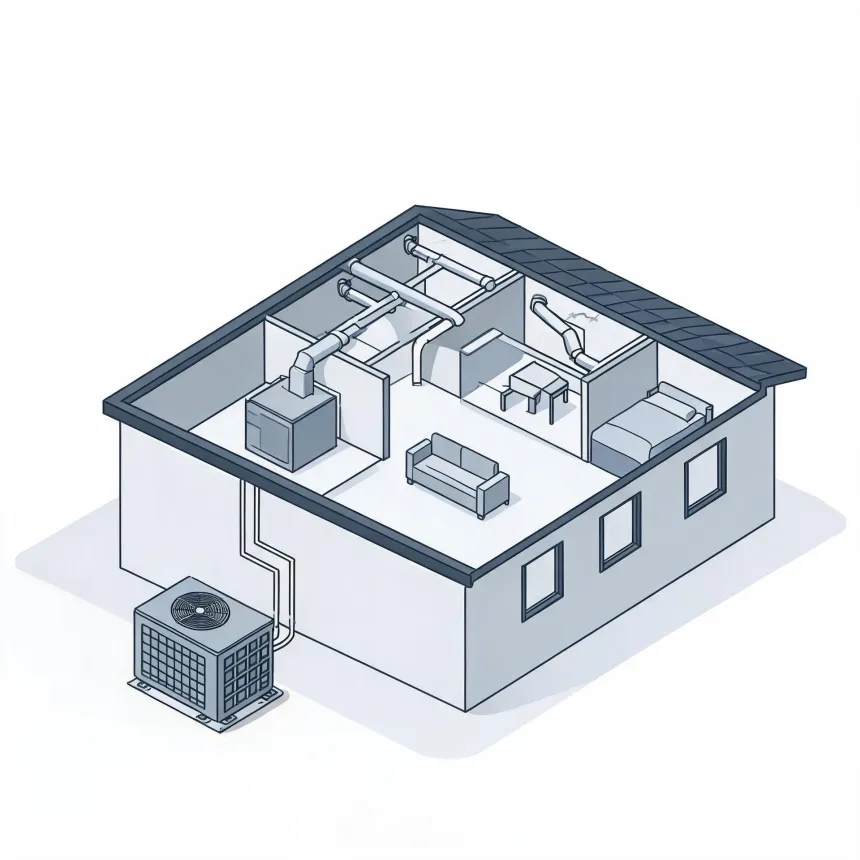
Isometric line illustration of a cutaway single-story house showing interior rooms with ducted air distribution, an indoor air handler, furniture, and an outdoor condenser unit connected by lines outside the wall.
Your system heats October through May and cools June through August.

NOAA nClimDiv, 1991–2020 normals

Woodbury County sees its share of damaging wind, hail and winter storms.

None of that is unusual for a heat pump, so a breakdown here is almost always a part that failed, not the weather that caused it.

Woodbury County weather is nothing a heat pump isn't built for

172 severe weather events from 2015 to 2024
15% of homes statewide lost power a day or more in 2024
88 damaging wind events from 2015 to 2024
This is an older county, house-wiseHalf the homes in Woodbury County were built in 1959 or earlier.

A heat pump that's cycling too much or struggling to keep up doesn't just leave you uncomfortable, it runs up your bill while it's at it. Iowa homes paid 13.40 cents per kilowatthour in 2024, and a heat pump working harder than it should pulls more power every hour it runs that way. A bad capacitor or a low refrigerant charge makes the compressor work longer to do the same job, and you pay for that extra work whether or not the house ever gets comfortable. The fix is usually small. Waiting on it isn't free.

Know what you're repairing before you pay for it

If your heat pump came with the house, ask the tech how much life it has left before paying for a repair. A unit that's been running since the house was built may be closer to the end than the part that just failed.

Find a contractor
A gray air-source heat pump mounted on a concrete pad next to a house with gray vinyl siding, surrounded by gravel and flanked by green shrubs and white hydrangea flowers.

It doesn't get an off season

A heat pump doesn't get a season off to recover. Every time it cycles, something inside takes a small hit, whether that's the compressor's windings, the bearings in a motor, or the contacts in a relay opening and closing. A furnace that only fires up in winter gets months where nothing in it moves. A heat pump doesn't get that break. It's why age alone tells a tech less than they'd like. A unit that ran hard in a house with a leaky duct system wears faster than the same unit somewhere else, even if both were installed the same year. What matters more than the number of years is how the system's been sounding and performing lately, because that's what's happening to it now, not what happened to some average unit on a chart.

Check the thermostat first

Make sure it's set to heat or cool as needed, not just fan, and that the setpoint is actually past room temperature. Swap the batteries if it uses them. It sounds obvious, but a thermostat stuck on the wrong mode or a dead battery looks exactly like a broken heat pump from where you're standing.
Look at the outdoor unit and the filter

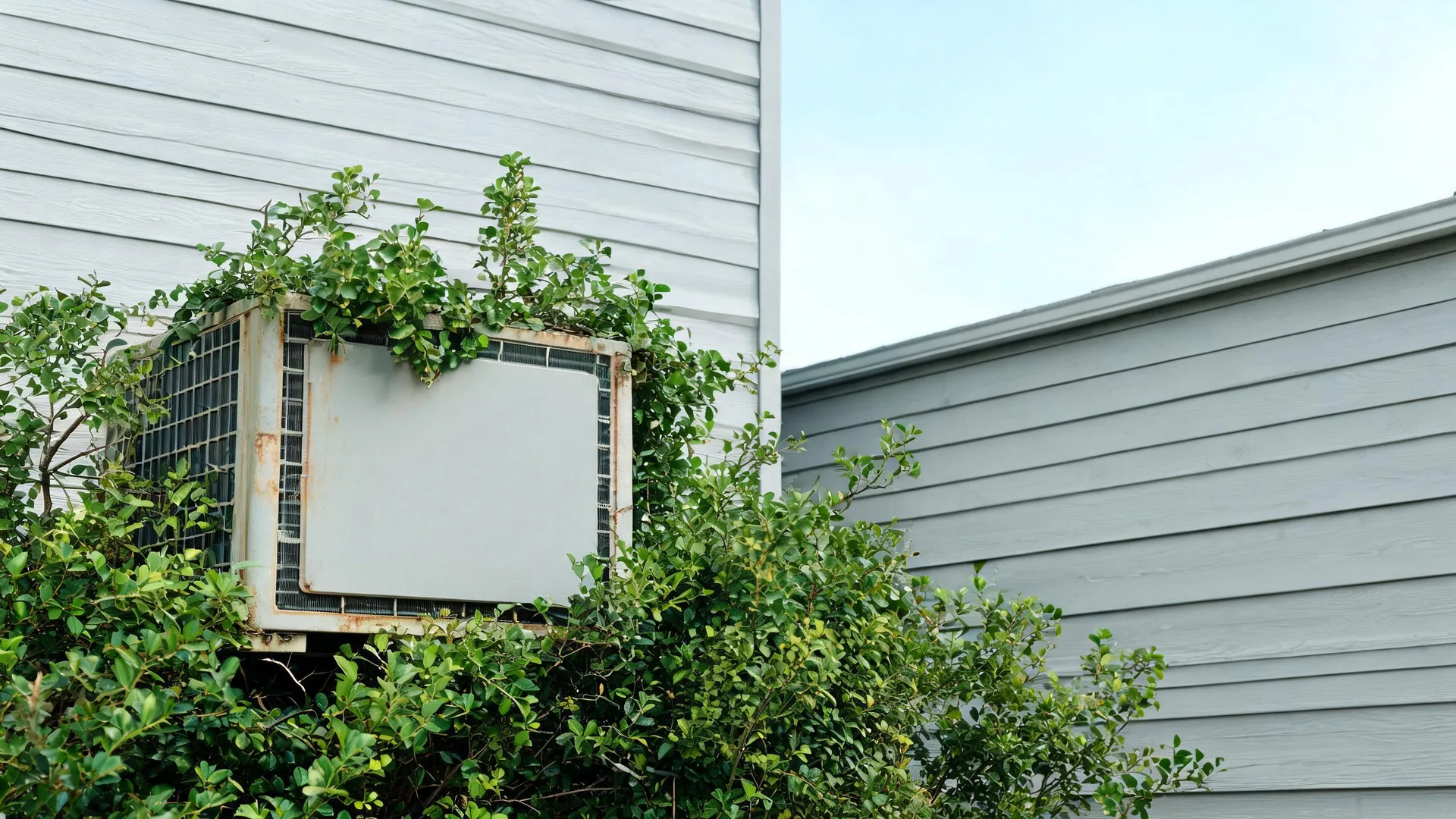
Clear away anything piled against the outdoor unit, leaves, snow, a grill cover, so air can move through it. Check the air filter and swap it if it's gray or clogged. A blocked filter or a buried outdoor coil starves the system of airflow, and a tech will check both before looking at anything else.

A heat pump that's struggling will keep trying to do its job until something stops it, and that's the problem. Low refrigerant makes the compressor run longer to move the same amount of heat, and a compressor that runs hot for too long can burn out the windings inside it, turning a refrigerant leak into a compressor replacement. Ice on the outdoor coil blocks airflow, so the system pulls in less air and runs even longer to compensate, which packs on more ice. A failing capacitor makes the compressor or fan motor draw more current than it should, and that extra draw wears down a motor that might have had years left in it. None of these fix themselves by running more. They get worse under load, and the part that could've been replaced on its own takes other parts down with it.

A diagnostic visit starts with the thermostat and the readings at the unit, not guesswork. A tech checks the suction and discharge pressures to see whether the system has the refrigerant charge it should, then checks the temperature split between the air going into the system and the air coming out. Low voltage gets tested at the board and at the capacitor, since a capacitor that's weakening still runs the motor but not the way it should. The reversing valve gets checked too, since a valve that's stuck explains a system that won't switch between heat and cool even when everything else tests fine. Once the numbers point somewhere, the tech explains what they found and what it takes to fix it before doing any of the work.