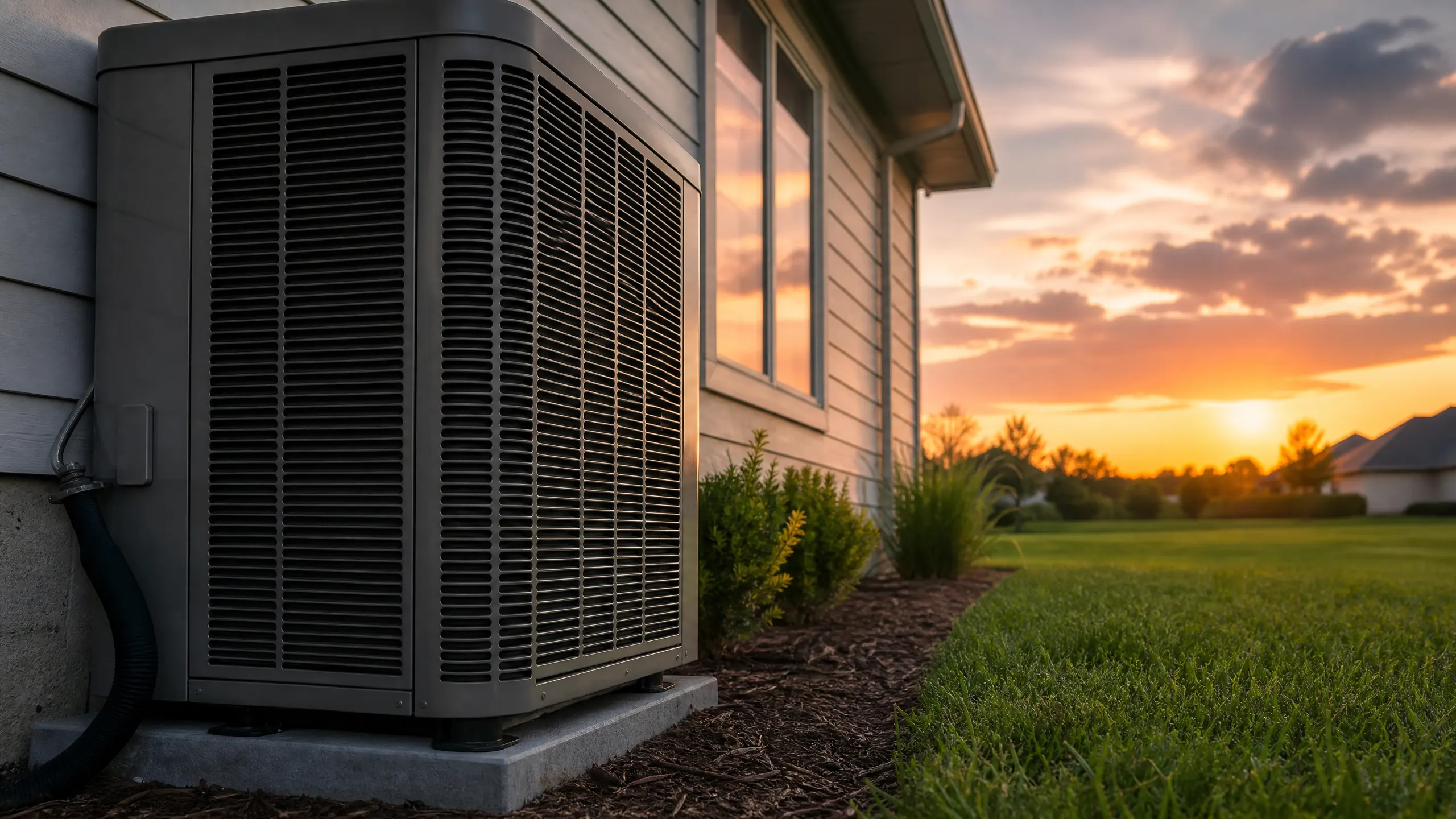





An outdoor air conditioning condenser unit mounted on a concrete pad beside a house at sunset.

Heat Pump Repair in Ames, IA

Tell us about the job

Takes about a minute. No obligation.

RepairHeat PumpStory County, IA
Step 1 of 2

What ZIP code is the job in?

Heat pumps here earn their keep from October through May, close to eight months of the year. October is when most homes switch it over from cooling to heat, and that first cold snap is when a weak part finally gets tested. A capacitor or contactor that was marginal all summer can fail the moment the system has to work hard in the other direction. If yours is short cycling, blowing cold air, or not keeping up now that the weather's turned, that's usually not a new problem. It's an old one showing itself at the start of the season.

8 months
October through May, your system heats
3 months
June through August, it cools
14°F
the average winter night it heats against
82°F
the average summer afternoon it cools against
Isometric cutaway illustration of a small house showing interior rooms with furniture, an indoor air handler with ductwork, and lines running to an outdoor condenser unit beside the building.
Your system heats October through May and cools June through August.

NOAA nClimDiv, 1991–2020 normals

A heat pump that runs nonstop and still falls short of the thermostat setting is losing ground somewhere, not just working hard.

The gap between what the system is doing and what you asked it to do is what a tech needs to hear about before the part behind it quits for good.

Half the homes in Story County were built in 1984 or later

Half the homes here were built by 1984
82 damaging wind events from 2015 to 2024
113 hail events from 2015 to 2024

Story County sees its share of rough weather, 82 damaging wind events and 113 hail events over the past ten years. None of that is unusual for this part of Iowa, and a heat pump built to handle an Iowa winter is built to handle it. What wind and hail do cause, here same as anywhere, is power loss. A heat pump that cuts out during a storm and doesn't come back on afterward isn't damaged. It's a breaker that tripped or a disconnect that needs resetting, and a tech can tell you which in a few minutes on the phone.

A heat pump running wrong costs more in Iowa

Iowa electricity ran 13.40 cents per kilowatthour in 2024, and your heat pump leans on that rate more months than not. A unit that's short cycling or running nonstop without catching up isn't just uncomfortable. It's pulling power the whole time it struggles. Get the real cause found now, before another cold month runs through a system that isn't working right.

Find a contractor
A dark gray heat pump unit mounted on a concrete pad next to a house with gray siding and a stone veneer wall.

A newer system is worth fixing

If your house went up in 1984 or later, that likely goes for the heat pump too, especially if it's the original unit. A system with that much life left is usually worth fixing rather than replacing. Have a tech confirm what's actually wrong before you decide anything else.

What you can check yourself

Look at the outdoor unit first. Leaves, ice or a fallen branch around it can block airflow and make the system struggle. Check the thermostat is set to heat and the setting actually calls for more warmth than the room has. Go to the breaker panel and look for anything tripped, both the one for the outdoor unit and the one for the indoor air handler. Last, check your air filter. A filter packed with dust chokes airflow and can make a heat pump run long and still fall short.
What to leave alone

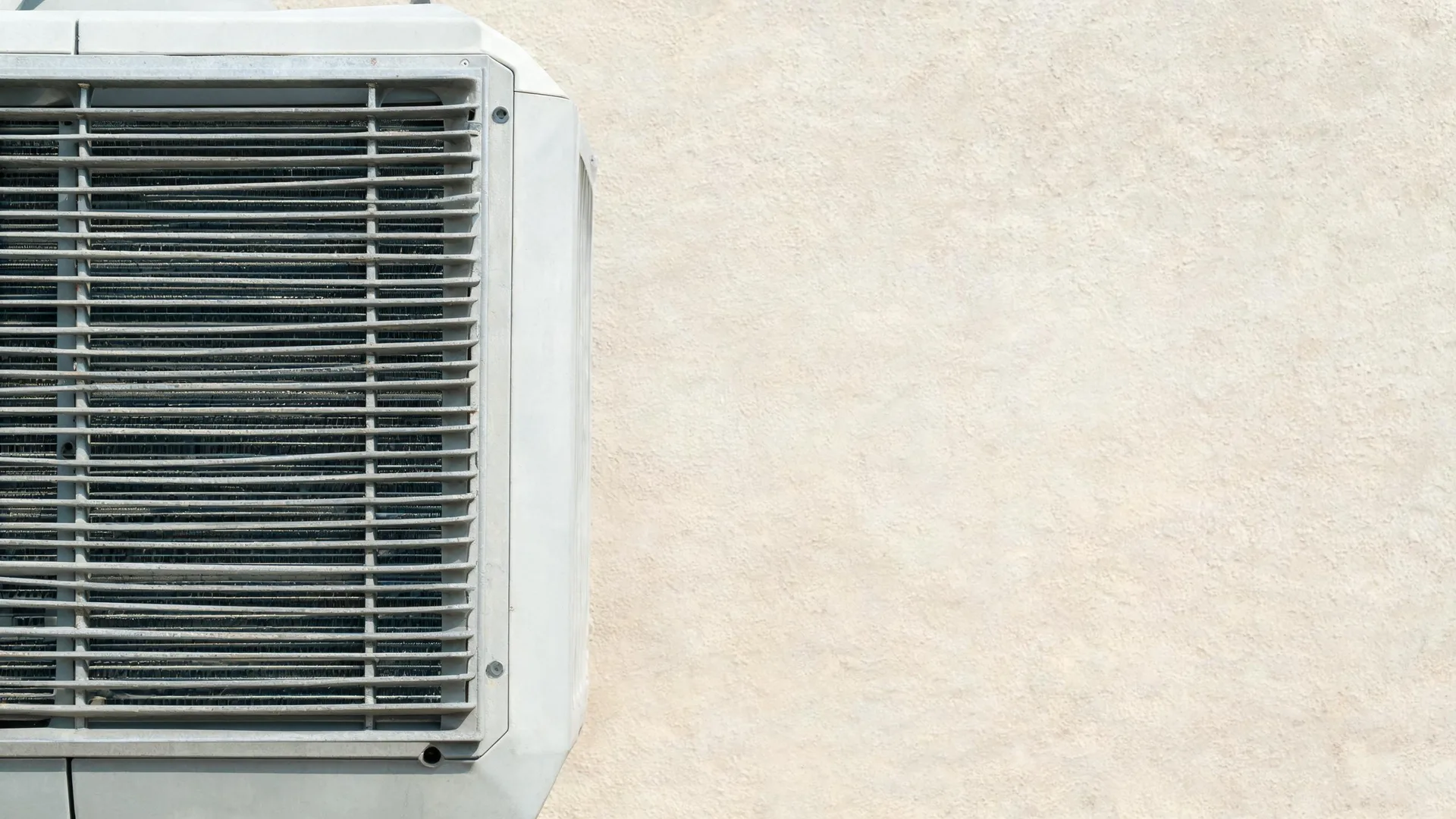
Don't open the outdoor unit's cabinet or touch the wiring inside it. Don't pour water or anything else on a coil you think is frozen, and don't try to chip ice off it. If the system is making a grinding or screeching noise, shut it off at the thermostat rather than let it keep running. These point to a part failing inside, and running it longer can turn a repair into a bigger one.

A frozen coil is the clearest example. Once ice builds up, it blocks the airflow the system needs to shed heat during the defrost cycle, so the unit runs longer trying to do a job the ice won't let it finish. A failing capacitor works the same way from the electrical side. It gives the compressor a weak start over and over, and each hard start heats the windings a little more until one of them finally breaks down. A refrigerant leak follows the same pattern. The system keeps calling for cooling or heat it can't deliver, the compressor runs longer to compensate, and it ends up working hot and dry in a way it was never built to do. In just about every case, the part that's struggling fails faster under load than it would sitting idle, which is why a system that's clearly off still deserves a quick shutdown while it waits on a tech.

A diagnostic visit starts outside, at the unit itself, not with a tool but with a look. A tech checks the coil for ice, listens for the compressor and the fan, and feels whether air coming off the coil is doing what it should. Inside, they pull the panel and test the capacitor and contactor under power, since both can read fine sitting still and still be the reason the compressor won't start clean. Refrigerant pressure gets checked too, because a system low on charge will run long and never catch up no matter what else is right. None of this is guesswork. Each reading either clears a part or points at it, and by the end the tech knows which part is failing rather than just that something is.