






Three illuminated two-story brick houses on a tree-lined residential street photographed at twilight, with warm window light and landscape uplighting visible against a deep blue evening sky.

Heat Pump Repair in Boone, IA

Tell us about the job

Takes about a minute. No obligation.

RepairHeat PumpBoone County, IA
Step 1 of 2

What ZIP code is the job in?

A heat pump in Boone County works for eight months straight, October through May, then switches over and runs cooling through the summer. That switch is where weak parts tend to fail. A reversing valve or a contactor that barely made it through last season often gives out the moment it's asked to work in the other mode. September is worth a look before heat kicks in, and May before cooling starts, because a part on its way out usually fails in the first cold snap or the first hot week, not in the middle of the season when it's already proven itself.

8 months
October through May, your system heats
3 months
June through August, it cools
14°F
the average winter night it heats against
82°F
the average summer afternoon it cools against
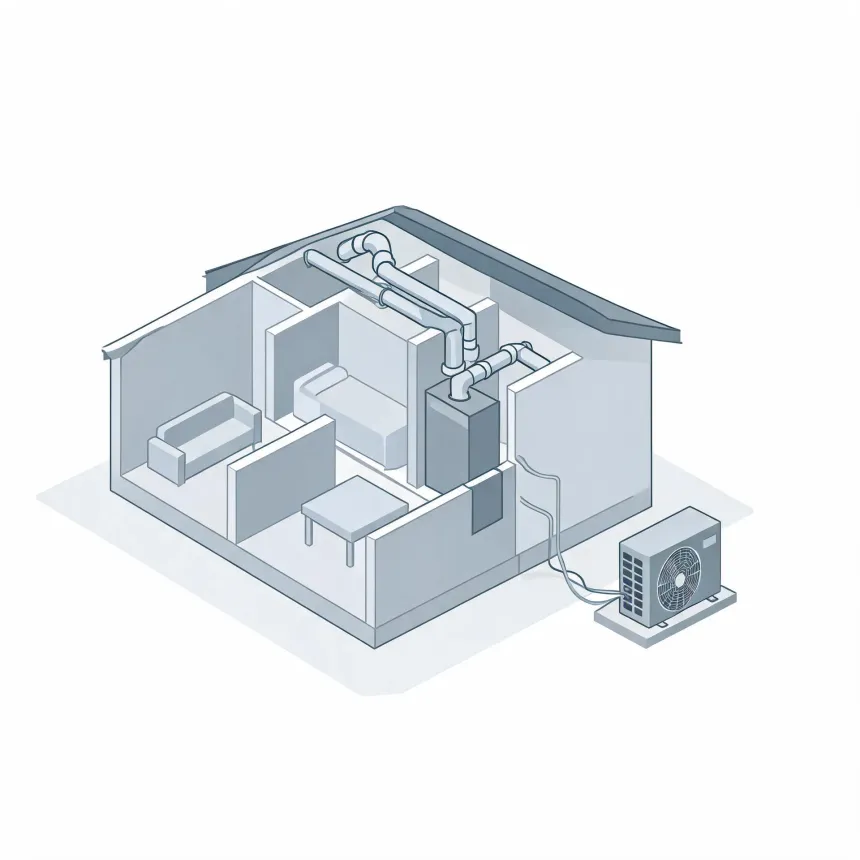
Isometric line illustration of a cutaway house showing interior rooms with furniture, ceiling ductwork connected to an indoor air handler, and a line running outside to an outdoor condenser unit.
Your system heats October through May and cools June through August.

NOAA nClimDiv, 1991–2020 normals

Boone County winters average 14°F overnight, but that's normal strain for a heat pump, not extreme.

The cause is almost always a weak part reaching its limit, not the cold itself.

Find out how old the heat pump is before you fix what's in front of it

Half the homes here were built by 1960
40 hail events from 2015 to 2024
25 winter storms from 2015 to 2024
Electricity here isn't cheap to wasteIowa homes paid 13.40 cents per kilowatthour in 2024, and a heat pump running on a bad part burns through that every day it's left broken.

If your house is one of the half built in 1960 or earlier, the heat pump itself is probably not that old, but it's worth finding out how old it actually is before paying for a major repair. Check the nameplate inside the unit for a manufacture date, or ask the contractor to pull it up when they come out. A unit that needs a compressor or a reversing valve replaced is a different decision depending on how many years it has left versus one that just needs a contactor. Get the age first, then decide what the repair is worth.

A broken heat pump still runs up the bill

A bad part doesn't just sit there. It keeps your heat pump running hard and pulling power at 13.40 cents a kilowatthour, every day nobody looks at it. Getting it diagnosed now stops the bleeding either way, whether it's a cheap fix or one worth weighing against the unit's age.

Find a contractor
A man in a dark long-sleeve shirt and tan work pants, seen from behind, climbs wooden porch steps toward a navy front door while carrying a canvas tool tote, with a potted flowering plant beside the entry.
A white mini-split heat pump outdoor unit mounted on a concrete pad beside a gray-sided house, surrounded by gravel and green shrubs.

What actually gives out in a heat pump

The reversing valve causes more heat pump failures than any other part. It's what flips the refrigerant flow so the same unit can heat in winter and cool in summer. When it sticks, the system can blow cold air when it should be heating, or just stop responding to the thermostat. The contactor is the other common failure point. It's the switch that sends power to the compressor. Its contacts pit and wear down a little every time it closes, until one day it doesn't close at all. A failing capacitor sounds different. The compressor or fan motor struggles to start, hums, or runs weak and trips off on its own protection. A refrigerant leak shows up as ice building up on the outdoor coil. Heating or cooling gets weaker over time, and it never gets better on its own. None of these parts wait for a convenient time to fail. They tend to give out right when the system gets asked to switch modes or work its hardest.

A weak part doesn't hold steady, it degrades

A reversing valve that sticks occasionally will stick more often. A contactor with pitted contacts loses a little more metal every time it closes. Neither one stays at the stage you first noticed it. Left running, the compressor keeps working against a part that's already failing, and that's what turns a contactor or valve job into a compressor replacement.
Ice and short cycling do their own damage

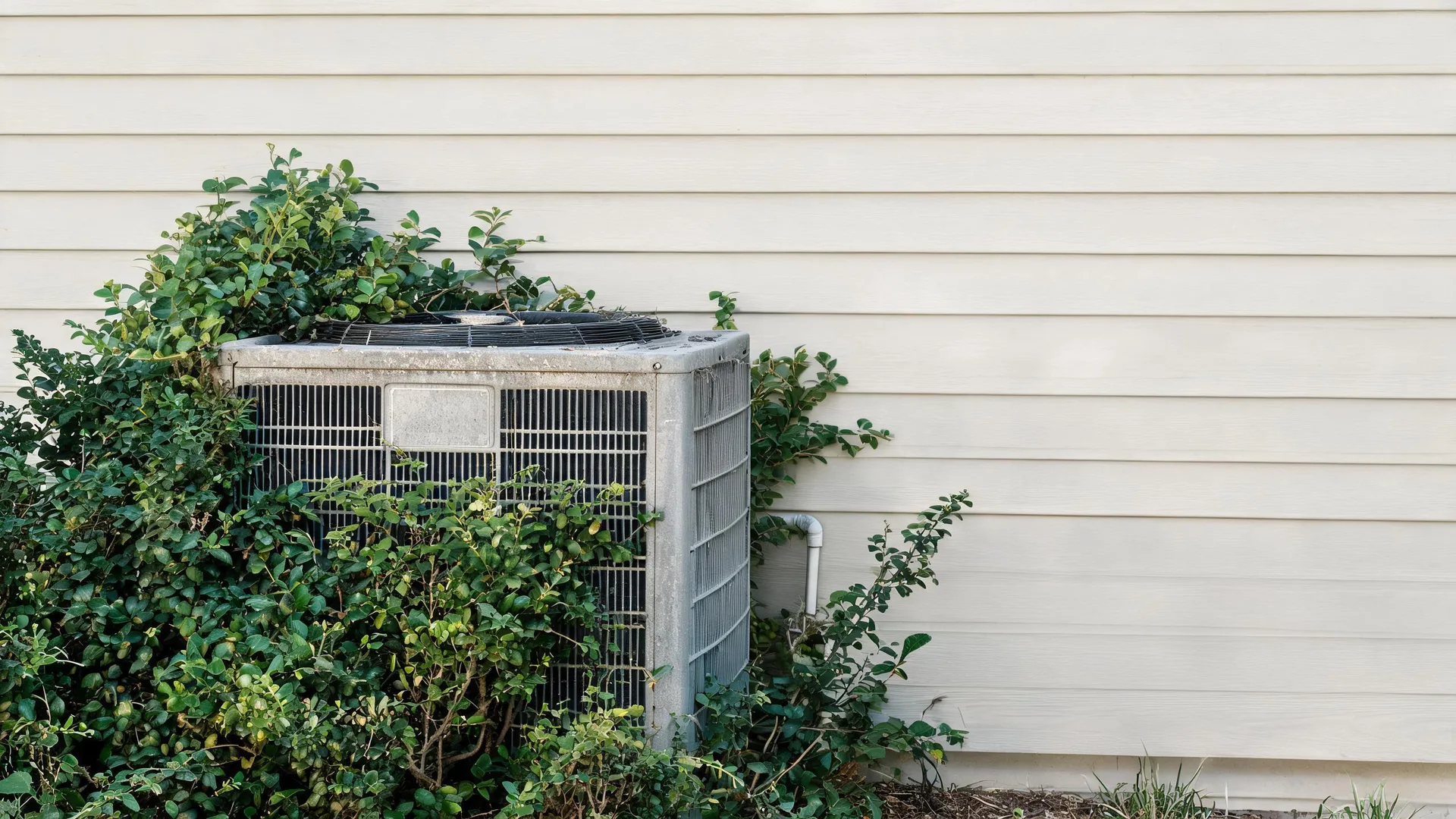
A refrigerant leak that shows up as ice on the outdoor coil gets worse the longer the system runs low on charge, because the compressor keeps pumping refrigerant it doesn't have enough of. A failing capacitor that makes the compressor struggle to start sends a hard jolt through the motor windings each time it tries. Shutting the system off when you first notice the problem protects the parts around it. Running it another week is how a part swap turns into a compressor or motor replacement.

Before you call, go to the thermostat and switch it from heat to cool, or the other way. Listen for a clunk from the outdoor unit as the reversing valve shifts. If you hear it try and the air doesn't actually change, that valve is the suspect. Check the outdoor unit itself for ice on the coil or the lines, especially if airflow has felt weak for a while. Look at the air filter while you're at it, since a clogged one starves the system and can look like a bigger problem than it is. If the outdoor fan isn't turning but you can hear the unit humming, don't poke at it. That's a capacitor or motor issue and it's not a safe one to touch yourself.

A diagnostic visit starts outside at the unit itself. A contractor will hook up gauges and check refrigerant pressure, since that reading says whether the charge is right or whether there's a leak to find. They'll pull the cover, look at the contactor contacts, test the capacitor, and watch how the compressor behaves when it tries to start. Inside, they'll run the thermostat through both modes and watch whether the reversing valve actually shifts when it's told to. Most of this is testing one part at a time, ruling things out until only one answer still fits. A leak gets found with a proper leak detector, not a guess, because patching the wrong spot means doing the job over.