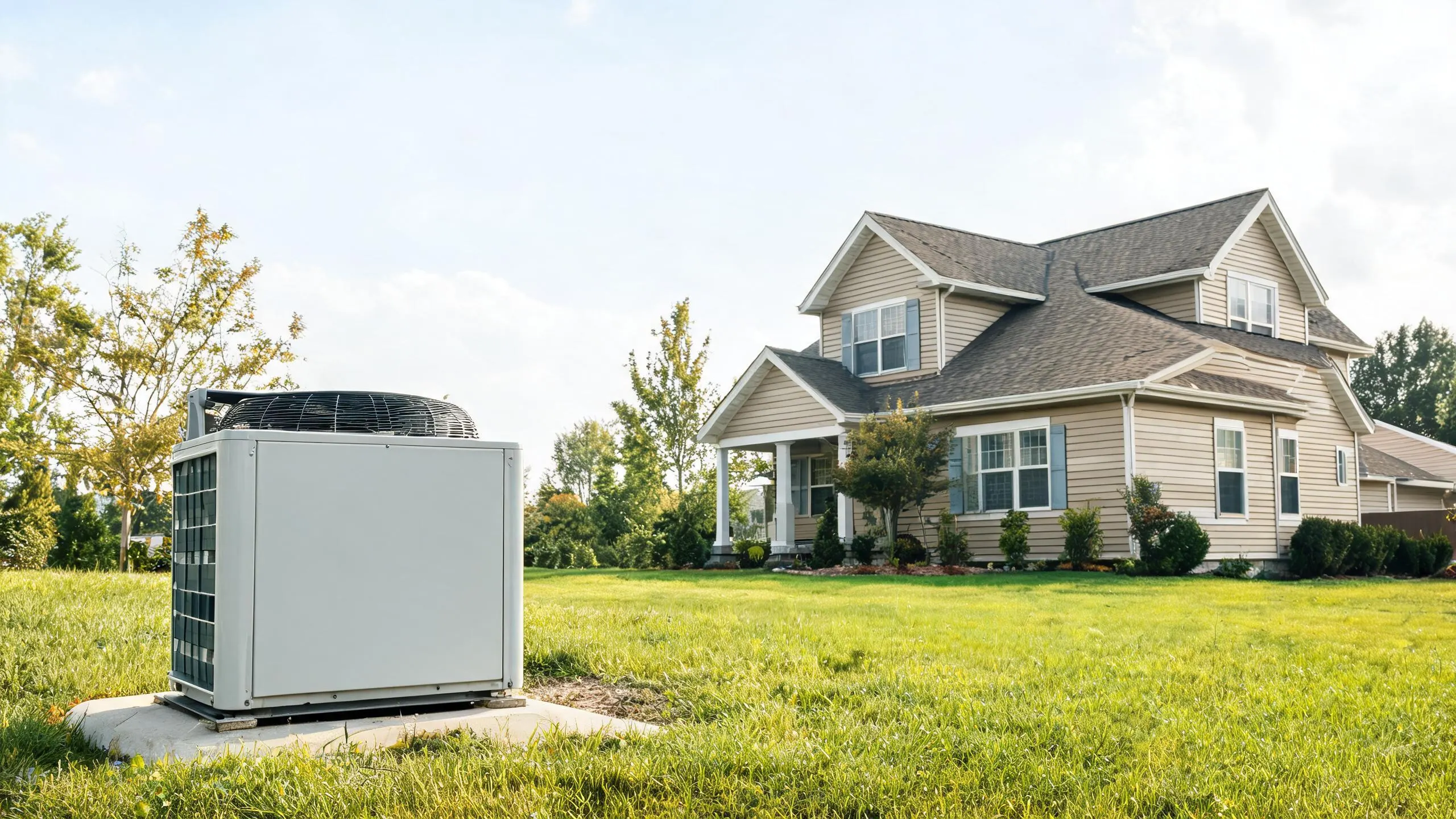






An outdoor HVAC condenser unit on a concrete pad in front of a two-story suburban house.

Heat Pump Repair in Burlington, IA

Tell us about the job

Takes about a minute. No obligation.

RepairHeat PumpDes Moines County, IA
Step 1 of 2

What ZIP code is the job in?

Burlington winters average 19°F overnight through December, January and February. That's real work for a heat pump, but it's normal work. Nothing about this area is especially hard on the system. When a heat pump stops keeping up here, the cause is usually something ordinary. Low refrigerant, a failing defrost control, a dirty outdoor coil, or a reversing valve stuck in one position. A tech who checks these first finds the real problem instead of guessing, and that's what gets it fixed for good.

8 months
October through May, your system heats
4 months
June through September, it cools
19°F
the average winter night it heats against
84°F
the average summer afternoon it cools against
Isometric grayscale illustration of a cutaway house showing interior rooms, ceiling ductwork connected to an indoor air handler, and an outdoor condenser unit beside the exterior wall.
Your system heats October through May and cools June through September.

NOAA nClimDiv, 1991–2020 normals

Heat pumps here switch from cooling to heat in October.

A weak part that made it through summer often fails in that first cold snap.

Nothing out here is hard on a heat pump. Wind and hail don't touch what's going wrong inside it.

Power costs 13.4 cents a kWh statewide
88 damaging wind events from 2015 to 2024
34 hail events from 2015 to 2024
Weather here isn't the problemDes Moines County saw 146 severe weather events from 2015 to 2024. Your heat pump's trouble is almost never one of them.

Half the homes in Des Moines County were built in 1959 or earlier. If your heat pump came with a house that old, nobody installed it new back then. It's a replacement, maybe a replacement for a replacement, and the house itself won't tell you its age. Check the data plate on the outdoor unit for a manufacture date. An older unit that needs a major repair, like a compressor or a reversing valve, is worth asking about differently than one that's still fairly new.

Check the data plate before you fix what might be on its way out

Find the manufacture date before you pay for a major repair. On a unit that's old enough, a compressor or reversing valve job is worth weighing against replacing the whole system.

Find a contractor
A dark gray heat pump unit mounted on a concrete pad next to a house with gray siding and a stone veneer wall.

What a tech actually checks

A tech starts outside at the outdoor unit before touching a single wire. They check refrigerant pressure with gauges, look at the reversing valve, and watch how the defrost cycle behaves. Inside, they check the air handler, the coils, and airflow across the system. Most of the visit is elimination. A heat pump that won't hold temperature could be low on charge. It could have a stuck reversing valve. It could have a failing defrost sensor. Each one gets tested, not guessed at. A heat pump does a job an air conditioner never has to do. It runs its cycle backward to put heat into the house instead of pulling it out. That reversing valve switches back and forth all season, and it's one of the first things a good tech rules in or out.

Ice that won't melt off

A heat pump's outdoor coil is supposed to frost up in cold weather and then clear itself during a defrost cycle. If you're seeing solid ice building up and staying there, the defrost control or a sensor isn't telling the system to run that cycle. Left alone, that ice blocks airflow across the coil entirely.
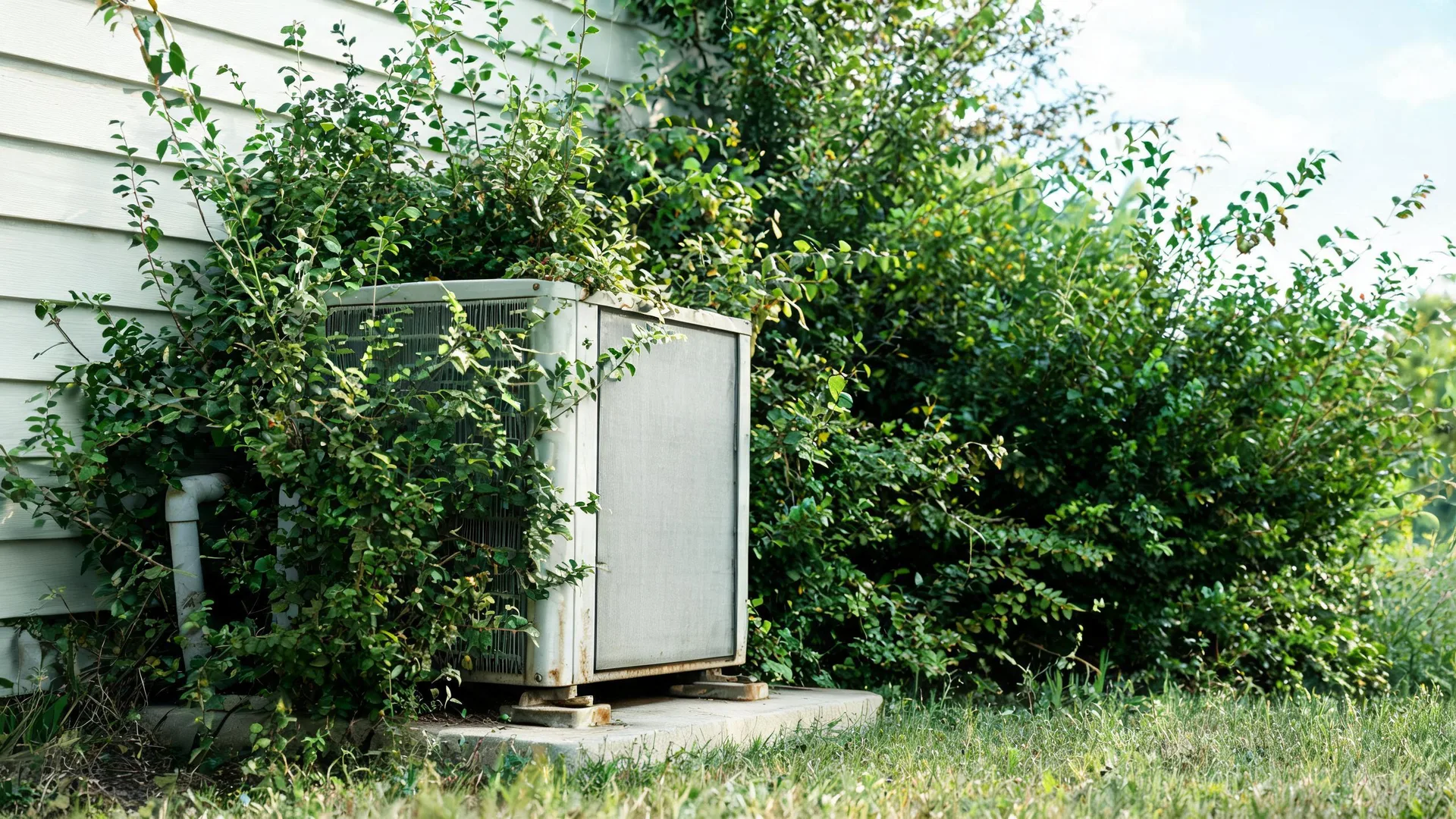
Air that feels wrong, not just weak

Heat pumps put out air that's warm, not hot, so a slightly cool register isn't always a problem on its own. What matters is whether the house actually holds temperature. If it's running constantly and still losing ground, or blowing air that feels closer to room temperature than warm, that points to low refrigerant charge or a reversing valve not fully switching.

A heat pump that's struggling doesn't fail all at once. It fails a little more every hour it keeps running. Low refrigerant charge is the clearest case. The compressor keeps trying to move a full cycle's worth of heat with less refrigerant than it needs, and it runs hotter doing it. A compressor that runs hot over and over wears faster than one that doesn't. A reversing valve stuck halfway is similar. The system fights itself, heating and cooling at once, straining parts that were never built to work against each other. Ice left on the outdoor coil blocks a little more airflow each hour, so the unit works harder and still doesn't clear itself. None of these get better left alone. They just get further along.

Age isn't the only thing worth weighing before a repair. Look at what's actually failing. A capacitor, a contactor, a blower motor, these are parts a tech replaces on their own, and the rest of the system doesn't care how old it is. A compressor is different. It's the one part that's expensive enough and central enough to make you ask whether the whole outdoor unit is worth keeping. A reversing valve sits in between. It's a real repair, but one a heat pump can come back from and run fine for years after. The other thing to ask is whether this is the first real repair or the third in a couple years. One failed part is a part failing. A pattern of them is a system telling you it's tired.