September matters most
Heat here switches over in October, so September is when a heat pump that's been struggling all summer gets asked to do something different. Whatever was marginal in cooling mode often fails outright in heating mode.

Takes about a minute. No obligation.
Heat here switches over in October, so September is when a heat pump that's been struggling all summer gets asked to do something different. Whatever was marginal in cooling mode often fails outright in heating mode.
A heat pump limping through August cooling won't fix itself when it starts heating. The same worn part that made it run long or short cycle in summer is what gives out once it has to carry the house through October and beyond.
NOAA nClimDiv, 1991–2020 normals
A tech checks the reversing valve first, because that's the part that tells the system whether to heat or cool.
Finding it stuck isn't the end of the job. They'll find out why it stuck before calling the repair done.




A heat pump that runs too long or cycles on and off too often is already spending more of your money than it should, every month, at 13.4 cents a kWh. That cost doesn't wait for a diagnosis. The longer the worn part stays in the system, the more it adds to the bill in the meantime. Getting it looked at now settles the question while it's still a cooling problem, before the switchover gives it a heating load to struggle with too.
A repair makes sense once you know the system has years left in it. If yours came with a house built in 1964 or earlier, ask the tech doing the repair for a straight answer on remaining life before paying for the bigger fix.
Find a contractor
A heat pump that's struggling doesn't hold steady until someone gets to it. A compressor working against a low charge keeps pulling the same load, and that wears the bearings inside it faster than normal running would. A failing capacitor makes the motor it feeds draw harder every time it starts, until the motor itself takes the damage. Ice on the outdoor coil, if the defrost cycle isn't clearing it, blocks airflow more each day it's left alone. None of these sit still. The part that's struggling now is building toward the part that quits.
Air coming from the vents that's warm but not hot. The outdoor unit running long after it should have stopped. Rooms that used to even out now staying a few degrees off no matter how long the system runs. These are the early signs, and they show up before anything quits outright.
A hissing or bubbling sound from the outdoor unit points to a refrigerant leak. Short cycling, where the system kicks on and off every few minutes, points to a bad sensor or a control board losing track of what the system is doing. Ice building up on the outdoor coil that doesn't clear on its own means the defrost cycle has stopped working. Any of these is worth a call before the weather asks more of the system.
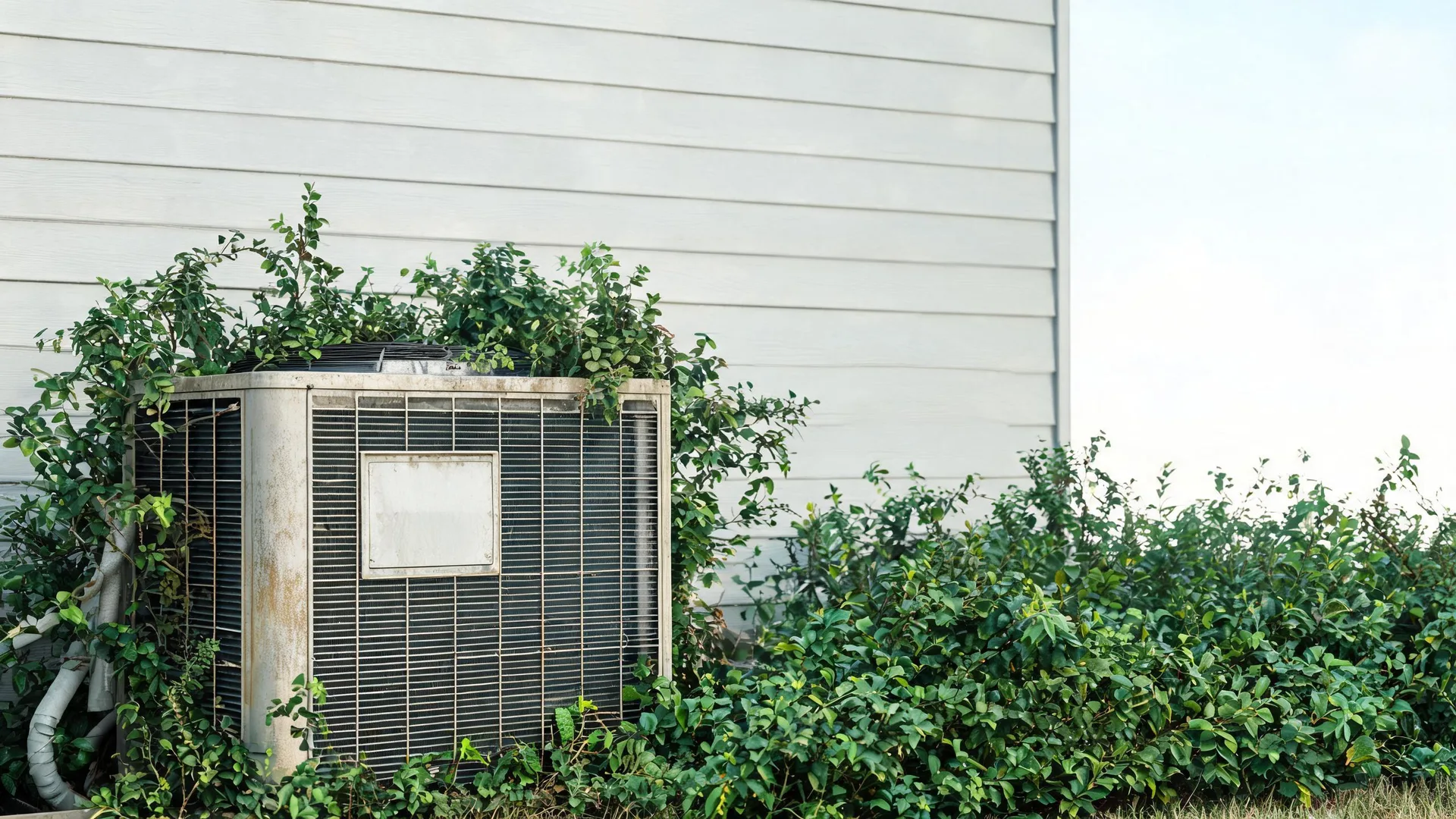
Before you call, there's a few things worth checking yourself. Go outside and look at the outdoor unit. If leaves, grass clippings or ice are packed around the coil, airflow is blocked and that alone can make the system struggle. Check the thermostat batteries and the setting itself, since a drained battery or a mode switched to the wrong setting looks exactly like a failing system. Walk around the house and look at every vent, because a vent that got closed or blocked by furniture cuts the airflow that whole room depends on. Check the breaker box for a tripped breaker on the outdoor unit's circuit. None of this fixes a stuck reversing valve or a refrigerant leak, but it rules out the simple stuff first, and it gives the tech a clearer picture of what's actually wrong when they do get there.
A heat pump doesn't give you a clean signal for when to stop repairing it and replace it instead. It gives you a string of small failures spread over time, and the question is whether they're related or just coincidence. A reversing valve going bad has nothing to do with a capacitor wearing out. Both can happen to the same system in the same year without either one saying the equipment is done. What matters more is what a tech finds when they're actually inside the unit. A compressor that's still pulling steady current and holding oil pressure has a lot of life left, whatever else is wrong with it. One that's been run low on charge for months, or iced over repeatedly without the defrost cycle catching it, has likely taken damage that a single repair won't undo. Ask what they found, not just what they fixed.