
Check the thermostat first
Make sure it's set to heat, not auto, and that the setpoint is actually above room temperature. Swap the batteries if it's got a blank or dim display. People call for a repair and the fix was a dead battery the whole time.
Takes about a minute. No obligation.
A heat pump that's struggling usually tells you before it quits outright. The most common sign is a system that runs and runs but never quite gets the house to temperature, especially when it's trying to pull heat out of cold outdoor air. Ice building up on the outdoor unit is normal in small amounts, but a coil that stays frozen over means the defrost cycle isn't kicking in right. Listen for the reversing valve, too. If you hear a clunk or hiss when the system switches between heating and cooling, or if it seems to get stuck in one mode, that valve is usually the cause. Warm air blowing when you've got it set to heat, or the outdoor fan not spinning while the unit hums, both point to something worth having looked at soon rather than waiting it out.

NOAA nClimDiv, 1991–2020 normals
Heat here runs September through May, nine months out of the year.
A heat pump that starts September already weak will show it fast once the cold settles in.




A heat pump that's icing over, short cycling, or running nonstop to hold a set temperature is pulling more power to do less work. That cost shows up on the next bill, not months from now. If the reversing valve is stuck or the defrost cycle isn't firing right, the system keeps drawing current without delivering the heat it should. Waiting on a repair like that just means paying more for the same bad performance a while longer. Get it looked at before another billing cycle runs on a unit that's already struggling.
Before paying for another repair, ask whoever comes out how much life the system has left. If it's original to an older house, a repair now might just be the first of several. Worth knowing before you spend on this one.
Find a contractorA heat pump works year round, so the parts that wear are the ones that move every time it cycles. The reversing valve is a common failure point because it switches position on every single run, and the seals inside it weaken with that constant back and forth. The outdoor fan motor sits outside in everything the weather brings, and bearings in it dry out or seize over time. Capacitors that start the compressor and fan lose their charge gradually, not all at once, so the system starts weaker each season until it doesn't start at all. The defrost board and sensor control how often the outdoor coil clears itself of ice. When that sensor drifts or the board fails, ice builds up faster than the system can melt it off, and the whole unit loses its ability to pull heat from the air. Refrigerant doesn't get used up, so a low charge almost always means a slow leak somewhere in the lines or coil, and that leak only gets worse left alone.
Make sure it's set to heat, not auto, and that the setpoint is actually above room temperature. Swap the batteries if it's got a blank or dim display. People call for a repair and the fix was a dead battery the whole time.
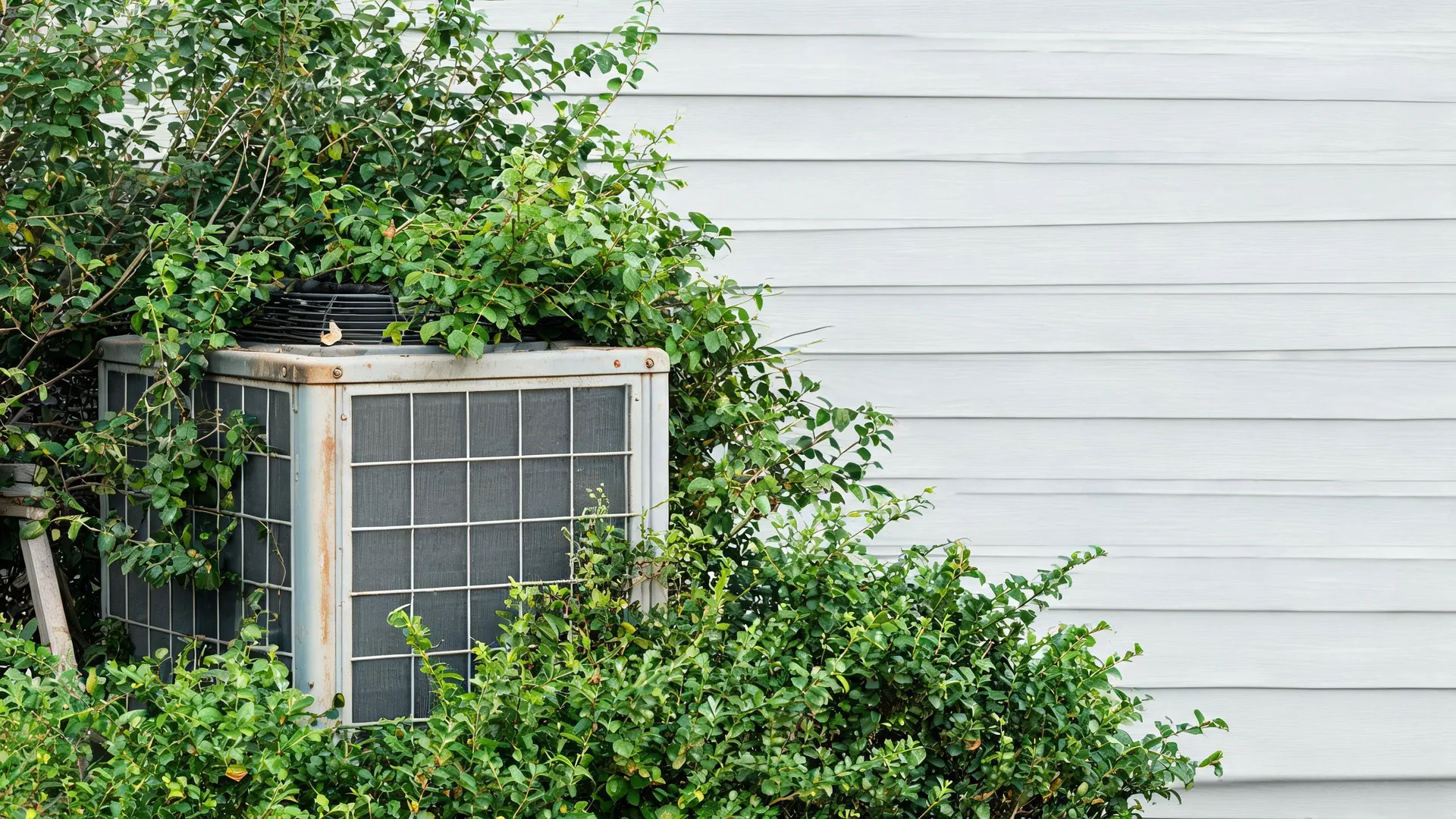
Clear away leaves, snow or anything piled against it, since the outdoor coil needs open air moving through it to work at all. Check that the fan is spinning. If the unit is humming but the fan isn't turning, that's worth telling the tech before they arrive, it points straight at the fan motor or capacitor.
A heat pump that keeps running with a problem doesn't just work less well, it lets that problem feed on itself. Ice on the outdoor coil blocks airflow, so the system pulls even less heat from the air and runs longer trying to catch up, which only grows the ice further. A reversing valve that's starting to stick gets worse with every cycle, since each switch wears the same seals a little more. A refrigerant leak behaves the same way. The system keeps running on a shrinking charge, the compressor works harder to move what's left, and that extra strain is what burns a compressor out. None of these fix themselves by running longer. They just move the repair from something small to something that takes the whole system down with it.
A diagnostic visit starts outside at the unit, checking refrigerant pressure and watching how the system responds when it's told to call for heat. The tech will check amp draw on the compressor and fan motor, since a motor pulling more current than it should is wearing out even if it's still running. Inside, they'll pull the cover and look at the reversing valve and defrost board, since those cause most calls like this. If the coil had ice on it, they'll want to know how often that happens and whether it clears on its own, because that tells them whether the defrost sensor is reading wrong or the board isn't triggering the cycle at all. Expect them to run the system in both heat and cool while they're there, since a valve that sticks sometimes only shows itself when it's asked to switch.