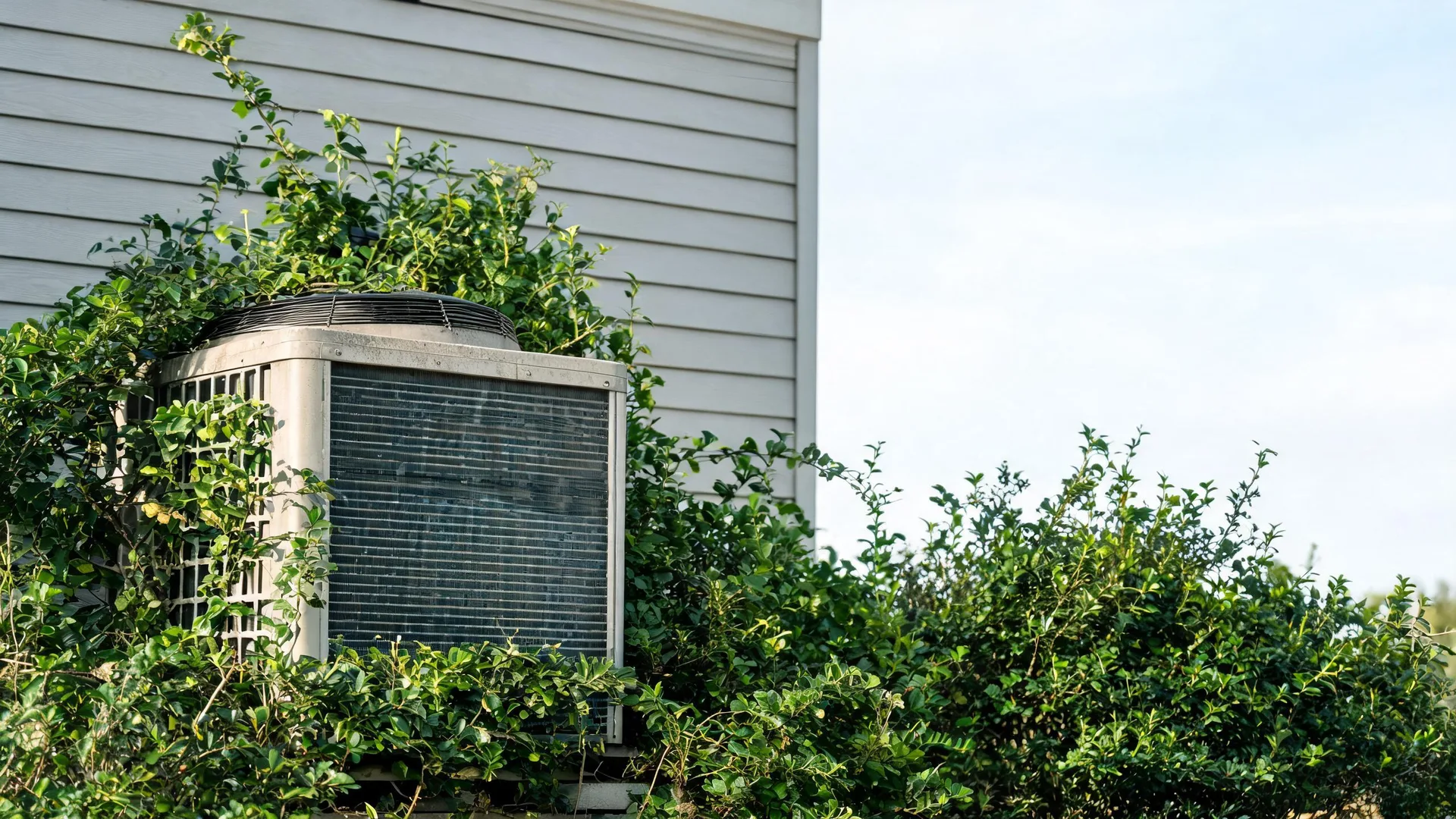
A grey outdoor HVAC unit mounted on a concrete pad beside the beige-sided exterior wall of a suburban house.

Heat Pump Repair in Fort Dodge, IA

Tell us about the job

Takes about a minute. No obligation.

RepairHeat PumpWebster County, IA
Step 1 of 2

What ZIP code is the job in?

Cold snaps don't break a heat pump

Overnight lows here average 13°F in January, and a heat pump built for this area is rated to handle that. If yours is blowing cool air or running nonstop on a cold night, that's a sign something needs a look, not proof the system is overmatched by the weather.

So the usual causes are where to look first

A low refrigerant charge, a failing defrost control, or a dirty coil will show up the same way in Fort Dodge as anywhere else. A tech should check those common points before assuming the cold is to blame.

8 months
October through May, your system heats
3 months
June through August, it cools
13°F
the average winter night it heats against
82°F
the average summer afternoon it cools against
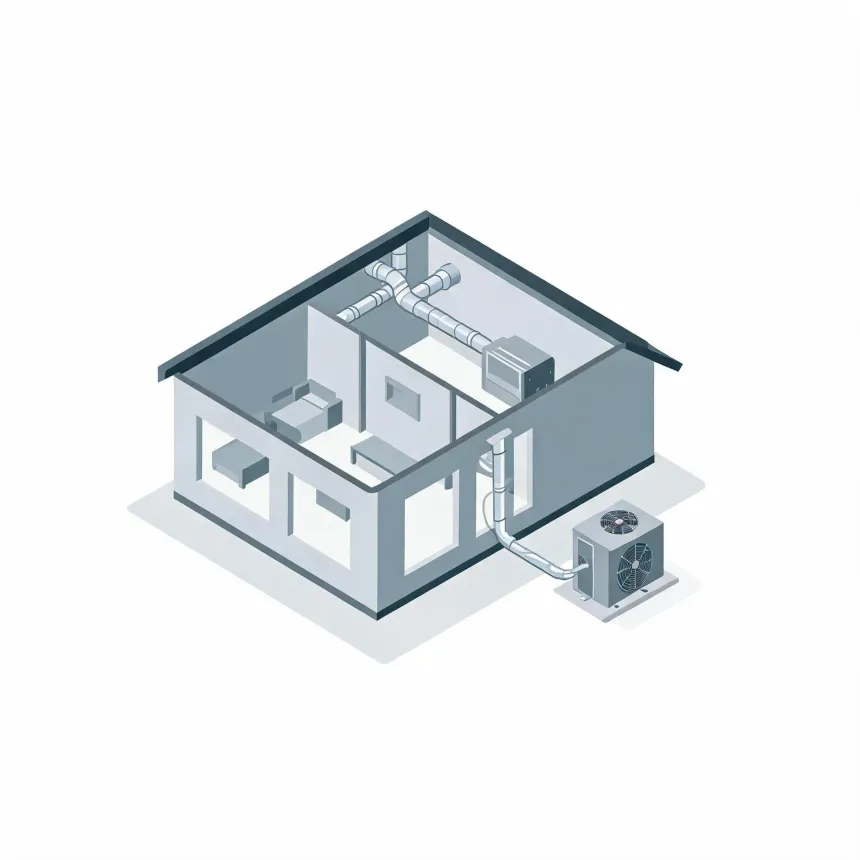
Isometric illustration of a cutaway house showing interior rooms, ceiling ductwork and an air handler, connected by lines to an outdoor condenser unit on a pad beside the building.
Your system heats October through May and cools June through August.

NOAA nClimDiv, 1991–2020 normals

Heat here starts up in October, after a September that asks nothing of the heat pump.

The first cold mornings put a load on it a mild September never did, and that's when a weak part gives out.

Half the homes in Fort Dodge are old enough to be on a second or third heat pump

Half the homes here were built by 1957
50 hail events from 2015 to 2024
31 winter storms from 2015 to 2024

Before you call, check the outdoor unit first. Clear away leaves, ice, or anything piled against it, since blocked airflow alone can make a heat pump struggle. Look at the air filter inside too. A clogged filter cuts airflow across the indoor coil and can cause weak heat or the system to ice up. Check the thermostat is set to heat and the temperature is actually set above room temperature, not just on. If you have a breaker panel, see whether the breaker for the outdoor unit has tripped. None of this requires opening the unit or touching refrigerant lines, and if the system still isn't heating after these checks, the problem is inside the system itself.

A heat pump that's struggling still costs you to run

Electricity in Iowa ran 13.40 cents per kilowatt-hour in 2024, on the higher side for this part of the country. A heat pump running on a weak part still draws power the whole time it runs, just without doing the job right. That cost shows up on the bill before the system quits outright.

Find a contractor
A gray heat pump outdoor unit mounted on a concrete pad next to a residential house with lap siding and stone accents.

Ask what the repair is buying before you pay for it

If your heat pump came with the house, find out its age before paying for a repair. Ask the tech whether it's worth fixing or close to the end of its run. That answer changes what the repair is actually buying you.

A weak part doesn't hold steady

A failing capacitor or a compressor straining to start doesn't level off. Each cycle it runs under that strain wears it down further, so the same problem that showed up as a slow start or a short cycle today can take out the compressor itself if the system keeps running on it.

Ice is the clearest example

A heat pump low on refrigerant or stuck mid-defrost will start icing the outdoor coil. Run it like that and the ice builds with every cycle, blocking airflow further and pushing the system to work harder to move the same heat, until it can't keep up at all.

Most people notice a heat pump problem through comfort first. The air coming out of the vents feels cool instead of warm, or the system runs and runs without the house ever reaching the set temperature. Sometimes it short cycles instead, kicking on and off every few minutes rather than running a full heating cycle. Listen for it too. A new rattle, a hard clunk when it starts, or a hum with no airflow behind it usually means a motor or a start component is failing, not just getting old. Ice on the outdoor unit that doesn't clear on its own during the defrost cycle is another one worth acting on. Any of these is reason enough to have it looked at before it gets worse.

A diagnostic starts outside at the unit itself. The tech checks refrigerant pressure, since a low charge is behind a lot of heating complaints and won't show up from a visual look alone. They'll check the defrost cycle too, making sure the system actually reverses and clears ice the way it's supposed to instead of running past it. Electrical readings come next. The capacitor, the contactor, the wiring at the compressor, each checked against what it should be reading rather than just whether it looks fine. Inside, they'll check airflow across the indoor coil and look at the reversing valve, since a valve stuck in the wrong position can leave you with a system that runs but never actually heats. By the end they can tell you which part failed and why, not just that something's wrong.