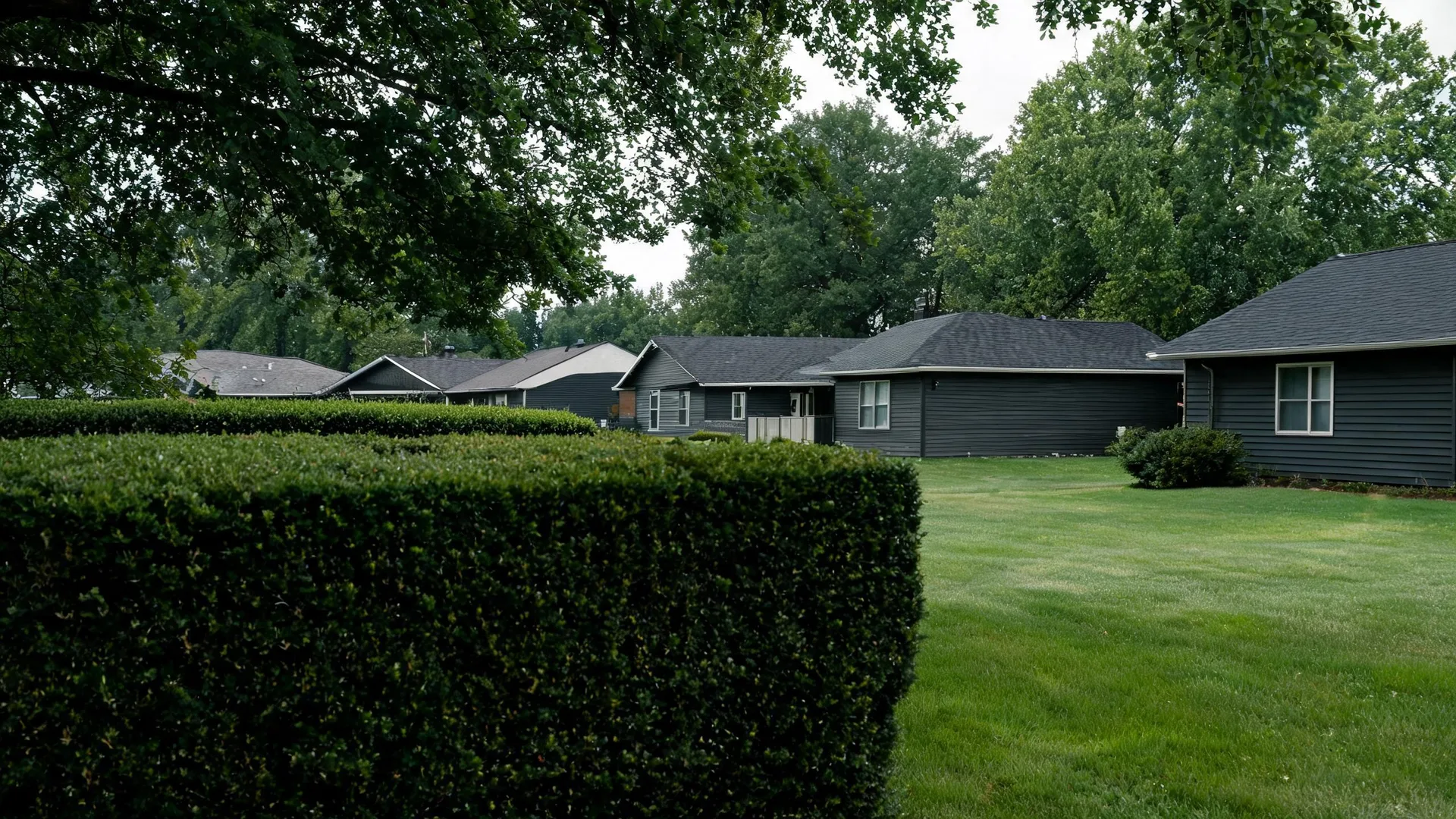






A trimmed hedge borders a mown lawn in front of single-story houses with dark siding and shingled roofs, surrounded by large leafy trees under an overcast sky.

Heat Pump Repair in Fort Madison, IA

Tell us about the job

Takes about a minute. No obligation.

RepairHeat PumpLee County, IA
Step 1 of 2

What ZIP code is the job in?

Fort Madison winters bring overnight lows around 20°F in December, January and February. That's normal heat pump duty, nothing extreme. Your system is built to pull heat out of cold air down to much lower temperatures than that. When it's not keeping up, or the outdoor unit is running constantly, or you're getting more auxiliary heat than you should, the cause is usually something a tech sees all the time. Low refrigerant charge. A failing defrost control. A dirty coil. A reversing valve that's stuck. None of that has anything to do with where you live. It's the kind of problem that gets fixed once it's found.

8 months
October through May, your system heats
4 months
June through September, it cools
20°F
the average winter night it heats against
84°F
the average summer afternoon it cools against
Isometric line illustration of a cutaway house showing interior rooms, an air handler with ductwork in the attic space, and an outdoor condenser unit beside the exterior wall.
Your system heats October through May and cools June through September.

NOAA nClimDiv, 1991–2020 normals

September is the last month your heat pump runs cooling before it switches over in October.

A weak part can make it through a mild September and then fail the first cold week it has to produce heat.

Half the homes in Lee County went up by 1960 or earlier

Half the homes here were built by 1960
79 damaging wind events from 2015 to 2024
44 hail events from 2015 to 2024

Electricity in Iowa ran 13.40 cents per kilowatthour in 2024. A heat pump that's low on charge or stuck in auxiliary heat uses more of it than one running right, and you'll see that on the bill before you see anything else. That's usually the first sign something's off, well before the system fails outright. A tech checking the charge and the defrost cycle can tell you in one visit whether you're paying for a repair or paying for a problem that's still getting worse.

Your heat pump's problem has a known cause

Lee County sees its share of storms, wind and winter weather. None of that is what wears on a heat pump. These systems fail the same way everywhere. A refrigerant leak. A defrost control that quit. A coil that needs cleaning. A tech who knows what to check can usually find it in one visit and get it fixed.

Find a contractor
A man in a dark shirt and khaki pants, seen from behind, carries a worn leather bag as he climbs wooden porch steps toward a dark front door, with a potted shrub beside the entry.
A gray air-source heat pump mounted on a concrete pad next to a house with gray vinyl siding, surrounded by gravel and flanked by green shrubs and white hydrangea flowers.

What a tech actually checks

A diagnostic starts outside, at the unit itself. The tech checks the refrigerant charge first, because low charge explains more heat pump complaints than anything else. Gauges go on, and the pressures get read against what the system should show at that outdoor temperature. From there it's the reversing valve, the part that switches the system between heating and cooling. A valve that's stuck or leaking internally will make the system run without producing real heat, and that's a different fix than a charge problem. The outdoor coil gets checked too, looking for ice that the defrost cycle isn't clearing on its own. Inside, the tech checks the air handler, the blower motor, and whatever auxiliary heat kicks in when the heat pump can't keep up by itself. A system leaning hard on auxiliary heat is usually telling you the heat pump side isn't doing its job. The capacitor and contactor that run the compressor get tested as well, since a weak capacitor can look like several other problems until someone actually puts a meter on it. None of this takes guesswork. It takes going through the system in order until the reading that's wrong shows up.

The compressor rarely fails on its own

When a heat pump stops producing heat, the compressor gets blamed first, but it's usually something feeding bad conditions to it that gave out. Low refrigerant from a slow leak makes the compressor work outside its design range. A stuck reversing valve forces it to fight itself. By the time the compressor actually quits, something else has usually been wrong for a while.
What that means for the repair

Finding the real cause matters more than finding the broken part. A tech who replaces a failed component without checking what led to it is setting up the same failure again. Checking the charge, the valve, and the defrost board as a set is what tells you whether this is a one-time fix or the start of a pattern.

A heat pump that's struggling doesn't fail all at once. Low refrigerant lets the compressor run hotter than it's built for, and every hour it keeps running on a low charge adds wear that wasn't there before. A reversing valve that's stuck partway makes the compressor push against itself, and the longer that goes on, the worse its odds get. Ice on the outdoor coil works the same way. A little frost is normal, but if the defrost cycle isn't clearing it, the ice builds and blocks airflow, and the system works harder to move the same heat. None of these start as compressor problems. They turn into one if they run long enough without getting looked at.

A repair is worth doing when the part that failed is the part that's actually broken. A capacitor, a contactor, a defrost sensor, a low charge from a leak that's been found and sealed. Fix that and the system runs the way it was built to run. Replacement starts to make more sense when the compressor itself is the problem. That's the most expensive part in the system and the one most tied to everything else in it. It also makes sense when the same symptom keeps coming back after it's been fixed. That usually means something is wearing on the system that one repair won't stop. Age matters too, not as a number but as a pattern. A unit nearing the end of its working life tends to have more than one thing going wrong at once, even if only one of them is loud enough to notice yet. A tech who opens the cabinet and checks the whole system, not just the symptom you called about, is the one who can tell you honestly which situation you're in.