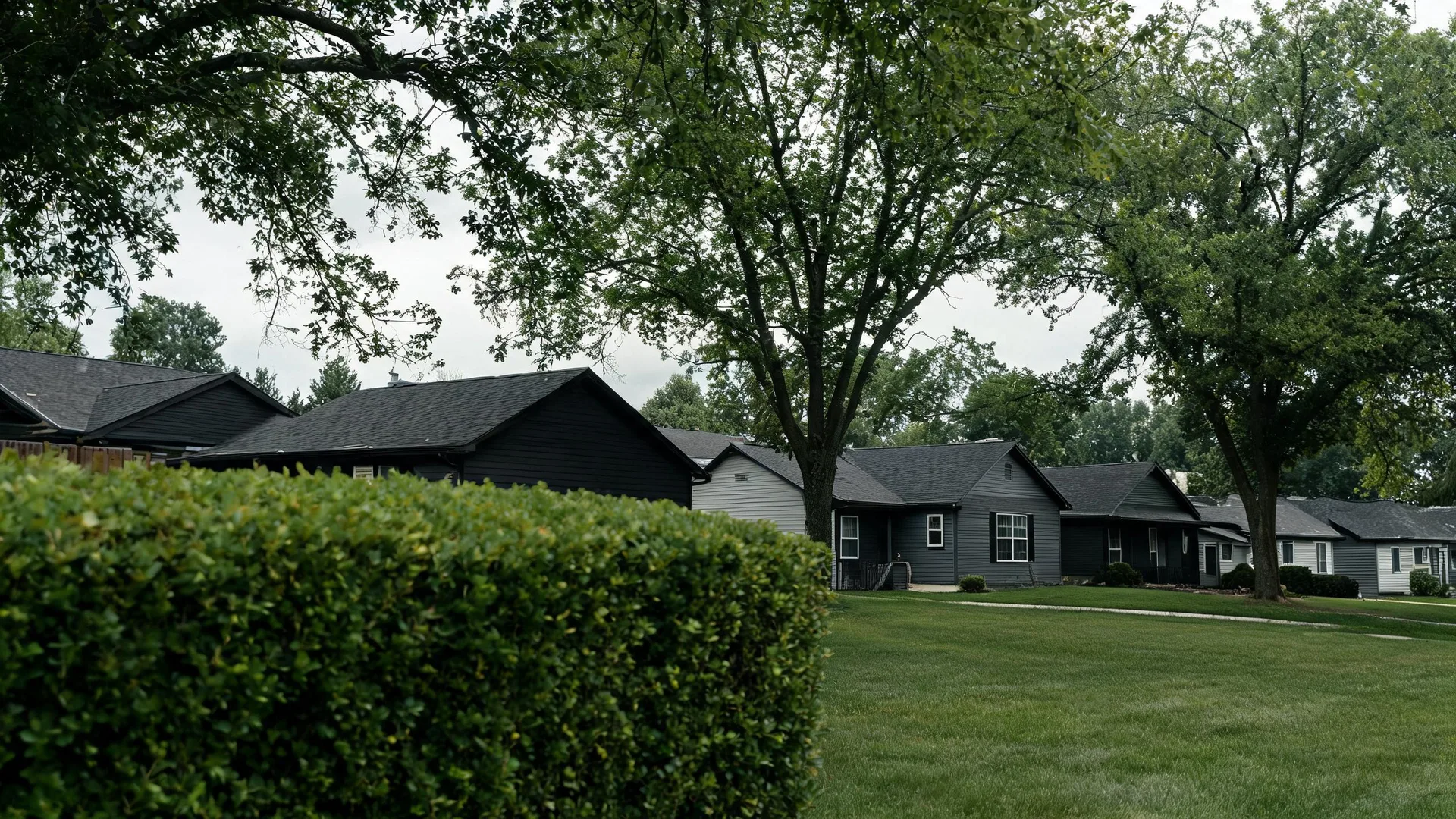




A row of single-story houses with dark siding and gray shingled roofs behind large deciduous trees, with a trimmed hedge in the left foreground and a mown lawn under an overcast sky.

Heat Pump Repair in Grinnell, IA

Tell us about the job

Takes about a minute. No obligation.

RepairHeat PumpPoweshiek County, IA
Step 1 of 2

What ZIP code is the job in?

Winter nights in Grinnell average 15°F, and that is when a struggling heat pump shows itself. It runs longer to hold the same indoor temperature, and if a part is already worn, that extra runtime is what pushes it into a breakdown. None of this means the cold here is unusual. Zone 5A winters are what heat pumps in this part of Iowa are built and sized for. So if yours is coming up short, the cause is almost always something ordinary. A low refrigerant charge. A failing defrost control. A reversing valve stuck in one position. Find that part and fix it, and the system goes back to doing what it was built to do.

8 months
October through May, your system heats
3 months
June through August, it cools
15°F
the average winter night it heats against
82°F
the average summer afternoon it cools against
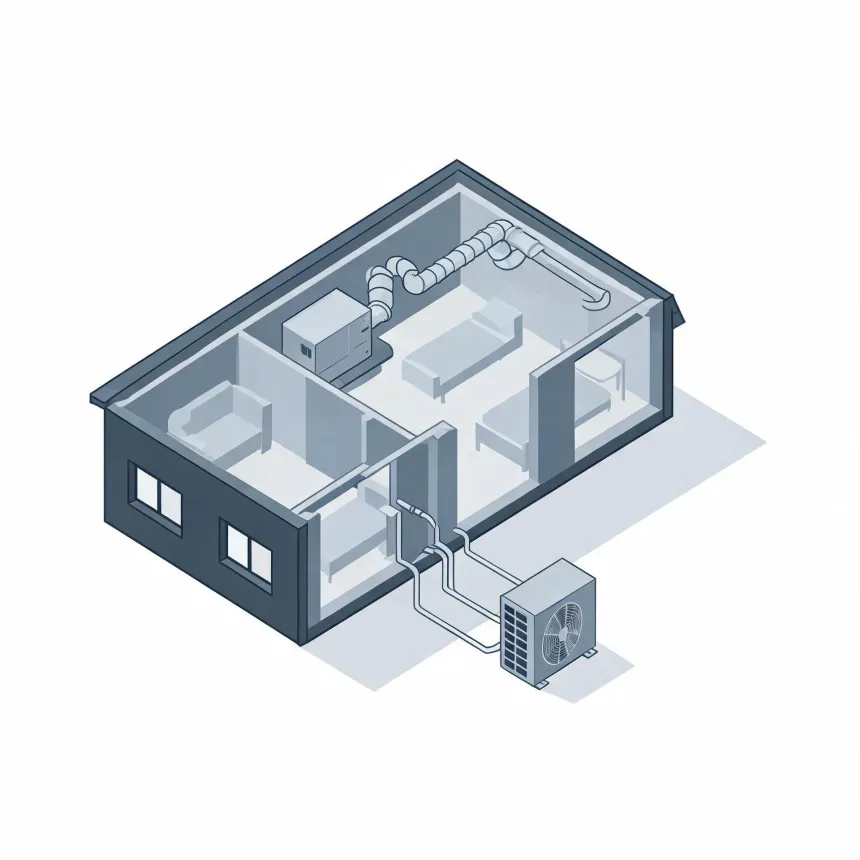
Isometric cutaway illustration of a small house showing interior rooms with furniture, an indoor air handler with flexible ducting, and refrigerant lines running to an outdoor condenser unit beside the building.
Your system heats October through May and cools June through August.

NOAA nClimDiv, 1991–2020 normals

Heat pumps here switch over to heating in October.

A unit with a weak part usually makes it through September fine and fails in the first cold snap.

Grinnell isn't hard on a heat pump. It just finds the part that was already weak.

Power costs 13.4 cents a kWh statewide
18 hail events from 2015 to 2024
21 winter storms from 2015 to 2024

A diagnostic visit starts outside at the unit itself, not with a clipboard. A tech checks the refrigerant charge with gauges. That reading tells you whether the system has a leak or a failed part, and those get fixed differently. The electrical side gets tested too. The capacitor, the contactor, the wiring at the compressor. A weak part there can look exactly like a dying compressor until someone actually measures it. The reversing valve gets checked by running the system through heating and cooling, because a valve that sticks only shows itself when it's asked to switch. Airflow matters as well. The filter, the blower, the ductwork near the unit, since restricted air can mimic a refrigerant problem well enough to fool a homeowner. By the end of it the tech isn't guessing which part is weak. They know, and they can tell you whether it's worth fixing or whether the rest of the system is close behind it.

Find out what's left in it before you fix it

A technician can check the compressor and refrigerant charge before doing any work on it, and tell you what kind of shape the rest of the system is in. Get that answer before deciding anything.

Find a contractor
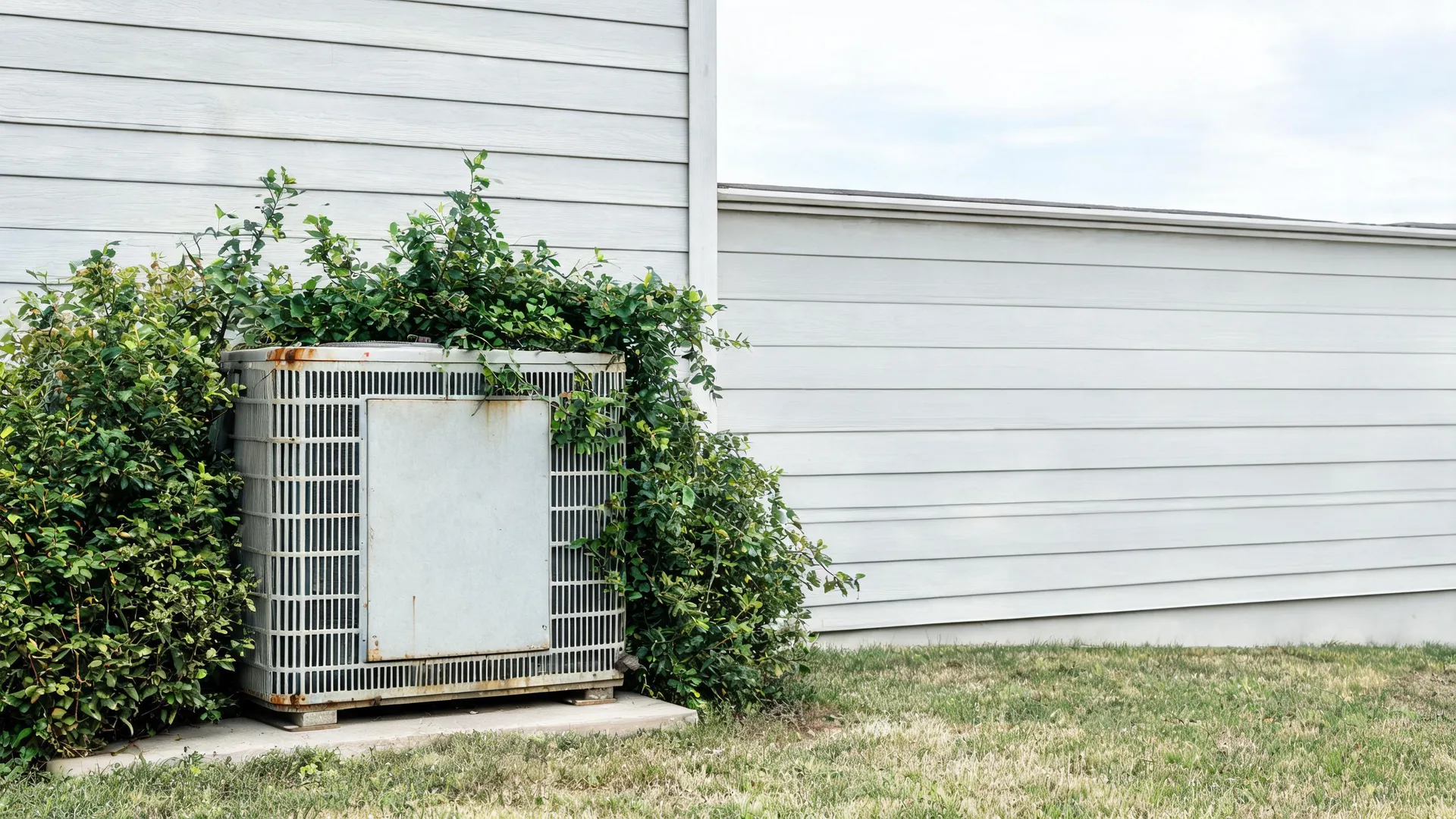
A gray air-source heat pump mounted on a concrete pad next to a house with gray vinyl siding, surrounded by gravel and flanked by green shrubs and white hydrangea flowers.

The parts that fail are the parts that were already wearing down

Most heat pump failures trace back to a part that was already weakening long before anyone noticed. A run capacitor loses its charge slowly over years, not all at once, so the compressor and fan motors keep starting on less and less help until one day they don't start at all. Bearings in the outdoor fan motor wear the same way, a little drier and a little louder each season until the motor seizes. Contactors pit and burn from the small arc that happens every time they open and close, which is thousands of times over a unit's life. A reversing valve sticks when the coil that shifts it weakens, or when debris keeps it from seating fully. None of these show up as a sudden break. They show up as the system working harder for the same result, cycling more, running longer, until the part finally gives out under a load it was already struggling against.

What you can check yourself

Look at the outdoor unit. Ice on the coil with no sign of a defrost cycle running is worth noting before anyone comes out. Check the air filter, a clogged one starves the system of airflow and can look like a failing unit when it just can't breathe. Feel the vents inside. Air that barely moves or feels only slightly warm points to a different problem than a system that won't turn on at all. Check the thermostat too, the batteries, the mode, the set temperature. A thermostat stuck in the wrong setting gets mistaken for a dead heat pump more often than it should.
What to leave alone

Refrigerant charge is not something to touch. Low refrigerant means a leak somewhere, and topping it off without finding the leak just empties it out again. The reversing valve, the part that switches the system between heating and cooling, needs a trained hand to diagnose when it sticks. If the outdoor fan isn't turning, or the unit is grinding or clicking, shut it off and leave it off. Running a heat pump on a failing motor or a bad start component is how a repair turns into a full replacement.

Most heat pump problems announce themselves before the system quits outright. Warm air that feels cooler than it should, usually a sign the unit is stuck trying to heat without enough refrigerant or without the reversing valve fully switching over. Short cycling, where it turns on, runs a few minutes, and shuts off again, points to a sensor reading wrong or a compressor that's struggling to start. A unit that runs constantly without ever reaching the set temperature is working against something, often a weak capacitor or airflow that isn't getting through. Ice building up on the outdoor coil during a stretch when defrost should be clearing it means that cycle isn't firing right. Grinding, clicking or a fan that hesitates before it spins are all mechanical complaints, not electrical ones, and they get worse the longer the unit runs on them. None of these mean the system is done. They mean something specific inside it is failing, and it keeps failing a little more each time the unit cycles through it.

A repair makes sense when the part that failed is a part on its own, something a tech can swap without the rest of the system being affected by it. A capacitor, a sensor, a contactor. Replace it and the heat pump goes back to doing what it did before. Replacement starts to make more sense when the failing part is the compressor itself, or when the refrigerant lines have started leaking from corrosion rather than from one bad fitting. A compressor is most of what a heat pump costs, and a system old enough to lose one is usually old enough that the rest of it is close behind. The other thing worth asking is whether this is the first repair or the third. One failed part is a failed part. A unit that keeps needing something new every season is telling you the whole system is wearing down at once, just not all in the same afternoon.