June is when weak units show up
Heat pumps here switch over to cooling in June after sitting idle most of the spring. A capacitor or contactor that was already marginal often fails under that first real load instead of waiting quietly.
Takes about a minute. No obligation.
Heat pumps here switch over to cooling in June after sitting idle most of the spring. A capacitor or contactor that was already marginal often fails under that first real load instead of waiting quietly.
A heat pump in Warren County goes from cooling to heat by October. Whatever is wrong with it now will still be wrong then, and the same weak part has to work through eight months of heat instead of four months of cooling.

NOAA nClimDiv, 1991–2020 normals
Warren County sees its share of hail and wind, the kind of weather that hits the whole house, not just the heat pump.
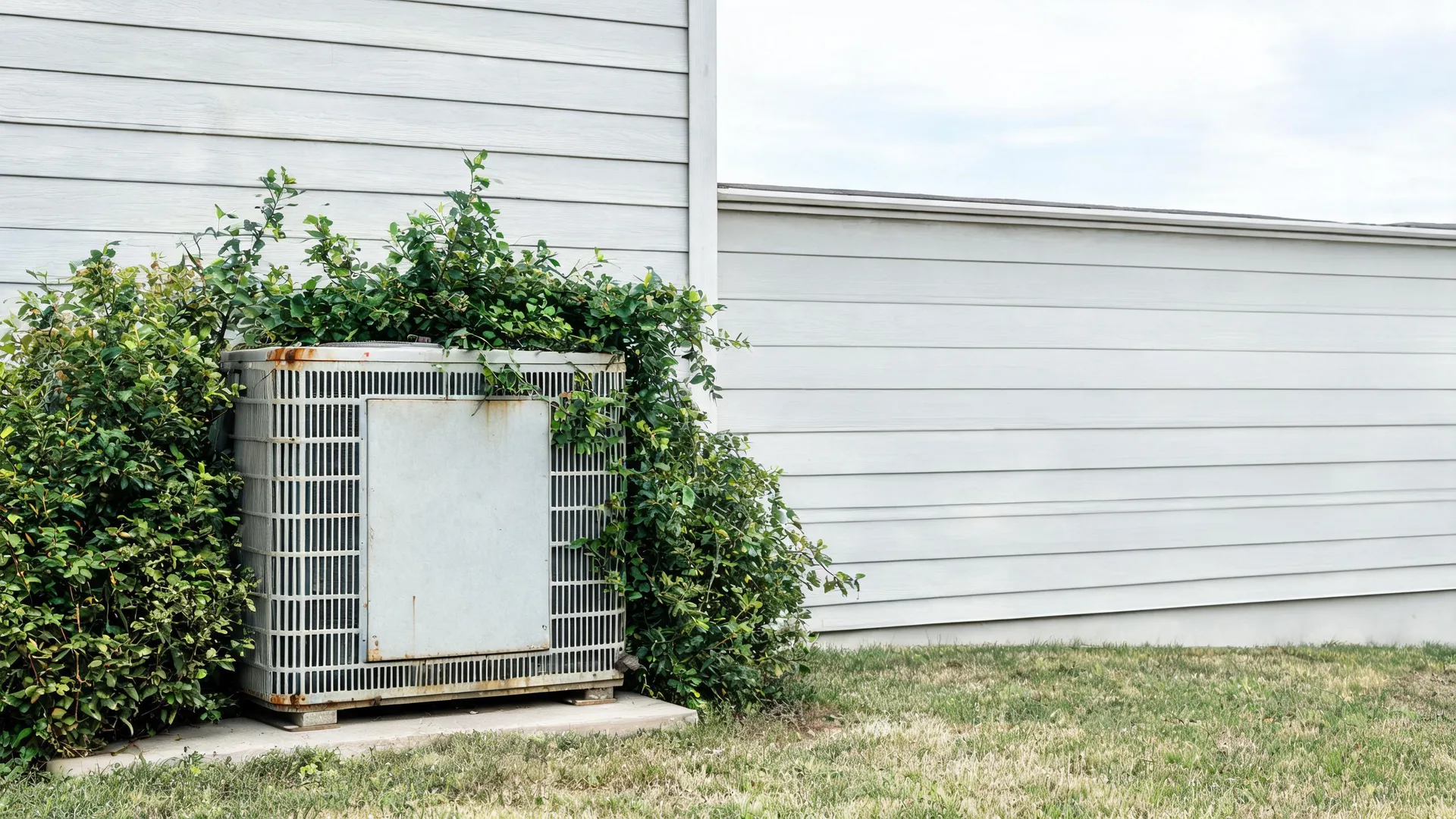
The outdoor unit sits through all of that same as the roof and siding, and most breakdowns still trace back to a worn part inside it, not the weather.




Warren County has seen 192 severe weather events over the past decade, mostly hail and wind, with a tornado touching down about once a year. None of that is unusual for this part of Iowa, and a heat pump sitting outside is built to take it. Power does go out sometimes. About 15% of Iowa households lost power for a full day at some point last year. If your heat pump won't start after an outage, check the breaker and any disconnect near the outdoor unit before you assume the worst. Most of the time what's wrong is something that would have failed anyway, a capacitor or a contactor or a stuck relay. The weather just happens to be what you remember from that week.
If your heat pump came with the house, there's a good chance it's still within its working life. Get it looked at and fixed rather than replaced.
Find a contractorBefore anyone comes out, check the thermostat first. Make sure it's set to cool or heat as it should be and the batteries aren't dead. Go to the breaker box and look for a tripped breaker, both for the indoor air handler and the outdoor unit. There's usually a separate disconnect box mounted right next to the outdoor unit too, pull it out and make sure it's seated in all the way. Look at the outdoor unit itself. If leaves, grass clippings or ice have built up around the coil, clear them away so air can move through it. A dirty filter is one of the most common reasons a heat pump struggles, so pull it and check it against a light. If you can't see light through it, replace it. Inside, look at the vents and make sure none of them are closed or blocked by furniture. If the outdoor fan isn't spinning at all, don't stick anything in there, just note it for the tech. If you smell something burning or hear grinding or screeching from either unit, turn it off at the thermostat and the breaker and leave it off.
The capacitor is the part most likely to wear out, and it rarely fails all at once. The fan runs slow, the compressor hums but won't start, or the unit kicks off on a hot stretch and won't restart by itself. A weak capacitor keeps getting weaker until the day it quits for good.
The reversing valve switches the system between heat and cooling, and a regular air conditioner doesn't have one. If it sticks, the unit blows cold air when it should be heating, or the outdoor coil ices over and doesn't defrost like it should. A stuck valve is a heat pump problem, not a general AC problem.
Short cycling is the one most people notice first. The heat pump kicks on, runs for a couple minutes, shuts off, then starts again a little while later. That's not normal wear, that's something cutting the run short, often a thermostat sensor or a control board telling the system to stop before it should. Another one is air that's technically running but doesn't feel like much of anything, not warm enough in heat mode, not cool enough in cooling mode. That usually points to the refrigerant charge or a failing compressor rather than anything you can fix by changing a filter. Ice on the outdoor coil when it shouldn't be there is worth watching too. A little frost in cold weather is normal, but a coil that stays covered or builds up thick means the defrost cycle isn't doing its job. And if the outdoor unit is making a new noise, a clicking that wasn't there before, a hum without the fan turning, that's the kind of thing to get looked at before it turns into a no-start.
A heat pump that needs a repair now doesn't necessarily need another one next year. Most failures come down to a single part giving out, a capacitor, a contactor, a control board, and swapping that part doesn't shorten the life of everything else in the system. The compressor and the reversing valve are what matter most when you're weighing repair against replacement, since those are the expensive ones to swap. If a tech tells you the compressor itself is failing, that's a different conversation than a worn capacitor. Ask what actually failed before you decide anything, not just that something did.