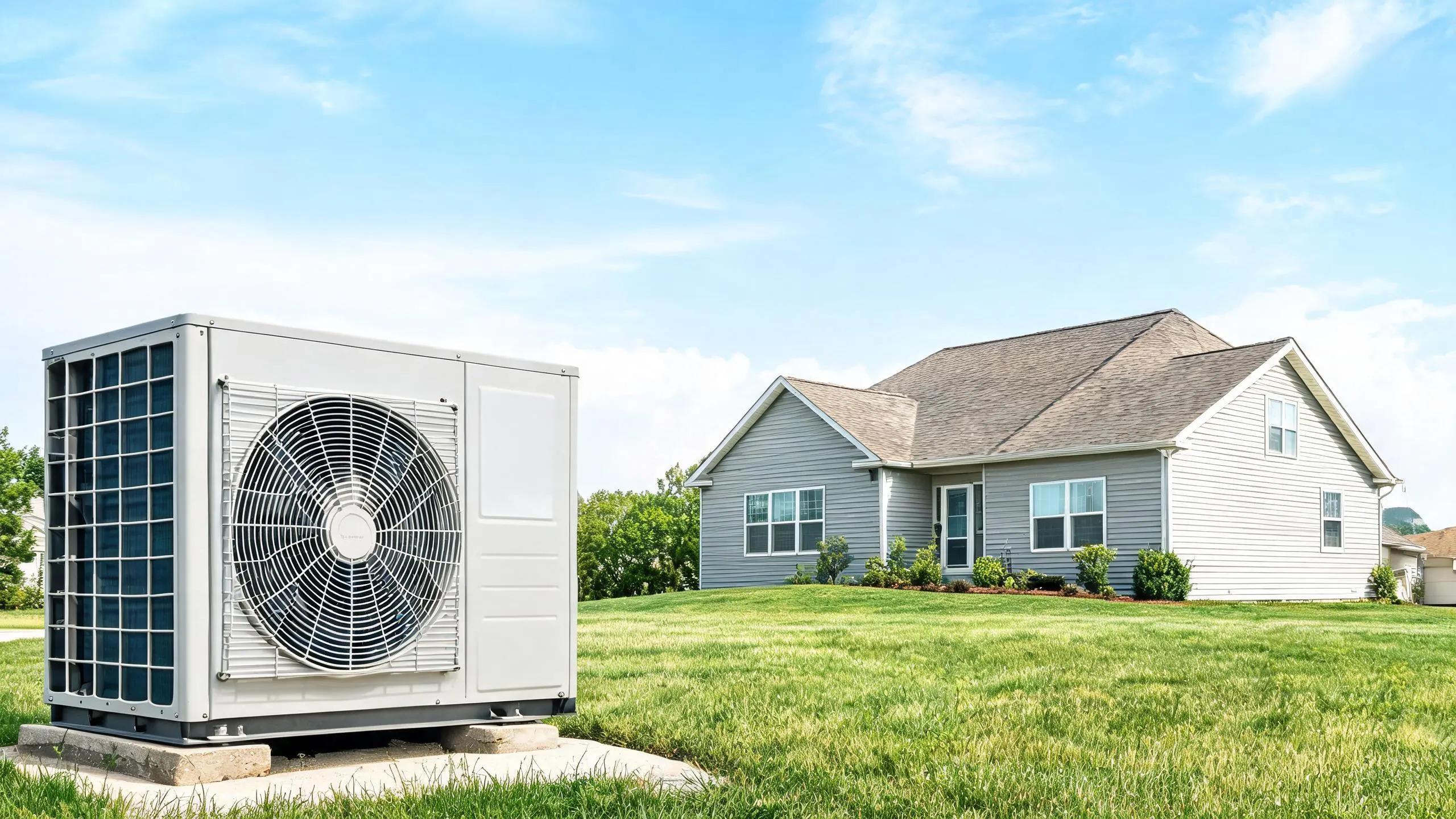





An outdoor HVAC condenser unit on a concrete pad in front of a single-story house with gray siding and a shingle roof.

Heat Pump Repair in Marshalltown, IA

Tell us about the job

Takes about a minute. No obligation.

RepairHeat PumpMarshall County, IA
Step 1 of 2

What ZIP code is the job in?

September is worth watching. Your heat pump sits idle most of the summer, then the first cool morning in fall asks it to switch over and run a full heating cycle. That's when a weak capacitor or a contactor that was already marginal tends to quit. May works the same way in reverse, after eight months of heating, the reversing valve has to switch back for the three months of cooling ahead. If your system has been short-cycling or the air coming out feels wrong for the setting, don't wait for the next cold stretch to get it looked at.

8 months
October through May, your system heats
3 months
June through August, it cools
14°F
the average winter night it heats against
82°F
the average summer afternoon it cools against
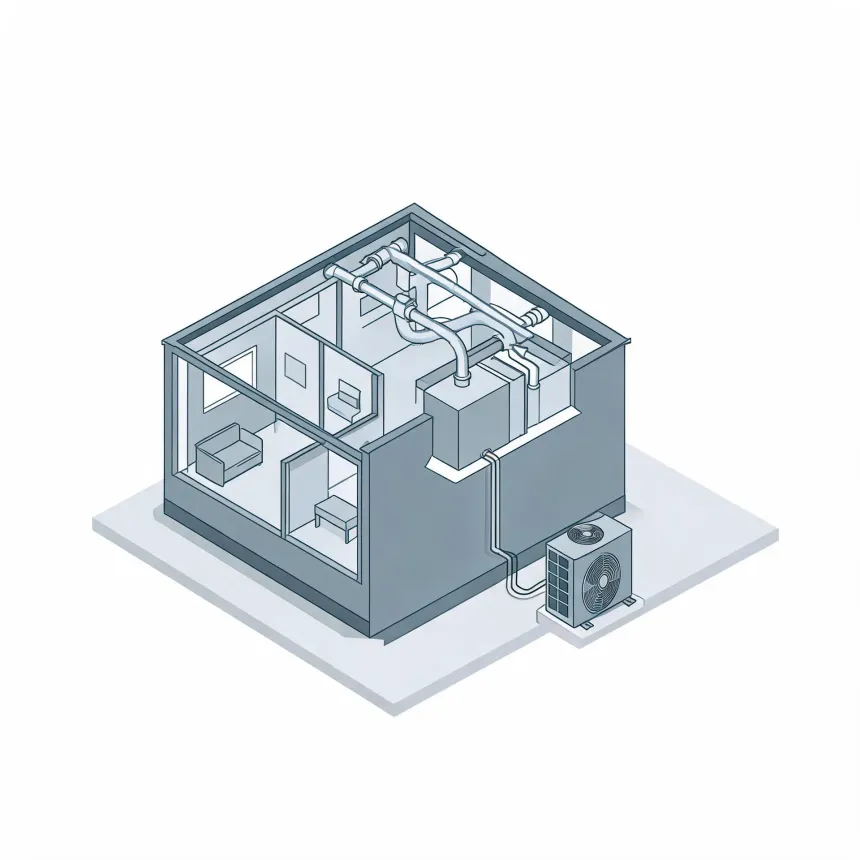
Isometric line illustration of a cutaway house showing interior rooms with furniture, ceiling ductwork connected to an indoor air handler, and refrigerant lines running to an outdoor condenser unit on a pad.
Your system heats October through May and cools June through August.

NOAA nClimDiv, 1991–2020 normals

A heat pump that's into its second decade is running on borrowed time even if it's working fine today.

When the repair bill climbs toward what a new system costs, that age is the deciding factor, not the breakdown itself.

Half the homes in Marshall County date to 1958 or earlier, which puts a lot of original heat pumps near the end of the road

Half the homes here were built by 1958
65 damaging wind events from 2015 to 2024
31 hail events from 2015 to 2024

Electricity in Iowa ran 13.40 cents per kilowatthour in 2024, and a heat pump leans on electricity for every degree it moves. A unit that's short-cycling or running constantly to chase a setting isn't just uncomfortable, it's pulling power the whole time it struggles. A weak capacitor or a stuck reversing valve doesn't stop your system, it just makes it work harder for the same result. That shows up on next month's bill before it shows up as a breakdown.

Every day it runs rough is another day on the bill

A system straining to hold a setting keeps pulling power the whole time it struggles, and at 13.40 cents a kilowatt-hour that adds up fast. Getting the cause found and fixed stops the drain, not just the discomfort.

Find a contractor
A man in a dark gray t-shirt and tan work pants, seen from behind, carries a canvas tool bag up porch steps toward a dark front door, with a potted plant beside the porch.
A residential heat pump outdoor unit mounted on a concrete pad next to a house with gray vinyl siding.

What to check yourself first

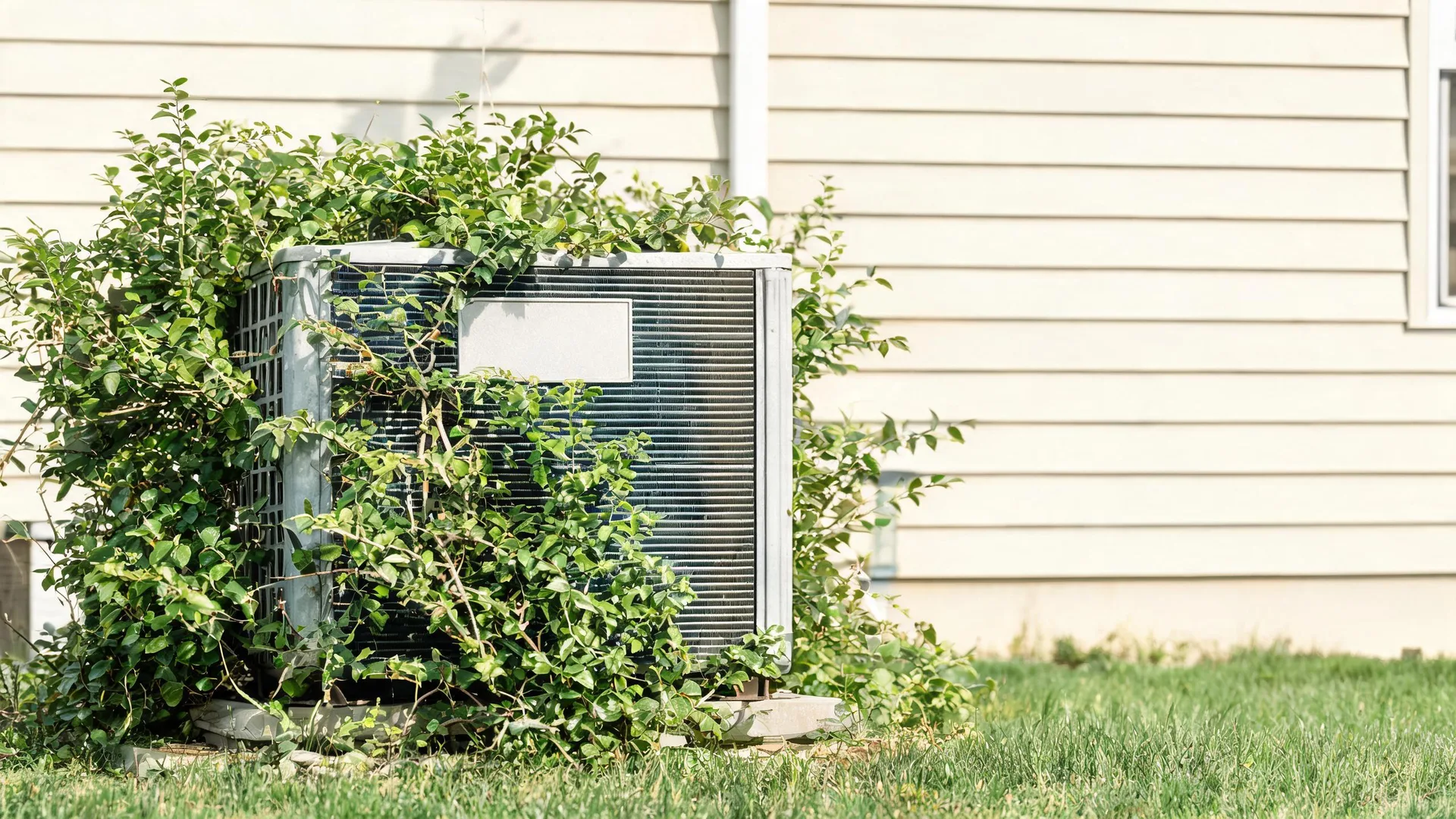
Before anyone comes out, walk outside and look at the outdoor unit. Make sure nothing is blocking it, no leaves packed against the coil, no snow or ice built up around the base, nothing sitting on top of it. Check that air is actually coming out of your vents, and feel whether it matches the thermostat setting, warm air when it's set to heat, cool air when it's set to cool. If you hear it clicking on and off every few minutes instead of running a full cycle, that's worth noting before you call. Check your air filter too. A filter packed with dust chokes airflow across the indoor coil, and that alone can make a heat pump struggle without anything actually being broken. Look at the thermostat batteries if it has a screen that's dim or blank. None of this fixes a bad capacitor or a stuck reversing valve, but it rules out the simple stuff first and gives whoever comes out a clearer picture of what you're seeing.

The capacitor takes the brunt of it

Every time the compressor or the outdoor fan starts, the capacitor delivers the jolt that gets it moving. That happens on every cycle, every day the system runs. Heat builds inside it with each start, and over time it loses its charge. A weak capacitor shows up as a unit that hums but won't start, or a fan that spins slowly, or a system that short-cycles because the compressor keeps tripping off.
The reversing valve is the part unique to a heat pump

A furnace never has to switch direction. A heat pump does, every time it moves between heating and cooling, and the valve that does it is sealed and gets no attention until it sticks. A stuck reversing valve gets you heat when you asked for cooling, or a system stuck in one mode no matter what the thermostat says. It's a mechanical part that moves every single cycle, so it's one of the first places wear shows up.

Most calls start with the system running but not doing its job. Air comes out of the vents but it's not warm enough, or not cool enough, and it runs longer than it used to trying to get there. Some homeowners notice ice building up on the outdoor unit when it's supposed to be heating, which means the defrost cycle isn't kicking in right. Others hear it switch on and off every few minutes instead of settling into a steady run. A hissing or bubbling sound near the lines usually points to refrigerant escaping somewhere it shouldn't. If the outdoor fan isn't spinning but you can hear the unit humming, that's often the capacitor failing to deliver the jolt it needs. None of these fix themselves, and a system working harder to do less is the clearest sign something inside it has already given out.

A diagnostic visit starts outside, at the unit itself. Readings come off the refrigerant lines, the compressor, the capacitor, checking what each is actually doing against what it should be doing. Electrical connections get checked for corrosion or a loose terminal, since a connection that's worked itself loose can mimic a failing part. Inside, the return air gets compared to the supply air, because that difference tells you whether the system is actually moving heat the way it should. The reversing valve gets tested in both directions, not just the one you called about, since a valve that's sticking usually shows some resistance before it fails outright. None of this takes guesswork. Each reading either falls in range or it doesn't, and that's what points to the part that's actually failing instead of the one that's just acting up alongside it.