A lit brick residential street at dusk showing a row of two-story homes with covered porches and mature trees.

Heat Pump Repair in Mount Pleasant, IA

Tell us about the job

Takes about a minute. No obligation.

RepairHeat PumpHenry County, IA
Step 1 of 2

What ZIP code is the job in?

Check the thermostat and the breaker first

Make sure the thermostat is set to heat or cool and not sitting in a dead zone between calls. Check the breaker for the outdoor unit and the air handler. A tripped breaker is a quick thing to rule out before anyone drives out. If the outdoor unit isn't running at all, this is where to start.

Look at the outdoor unit and the filter, then stop there

Walk outside and see if the fan is spinning and if ice is covering the coil. A little frost in cold weather during defrost is normal, but a thick coat that doesn't melt off is not. Pull the filter and hold it up to light. If you can't see through it, swap it. The refrigerant lines and the reversing valve aren't something to open up on your own. If the system still isn't heating or cooling right after these checks, it's time to call someone.

8 months
October through May, your system heats
3 months
June through August, it cools
18°F
the average winter night it heats against
83°F
the average summer afternoon it cools against
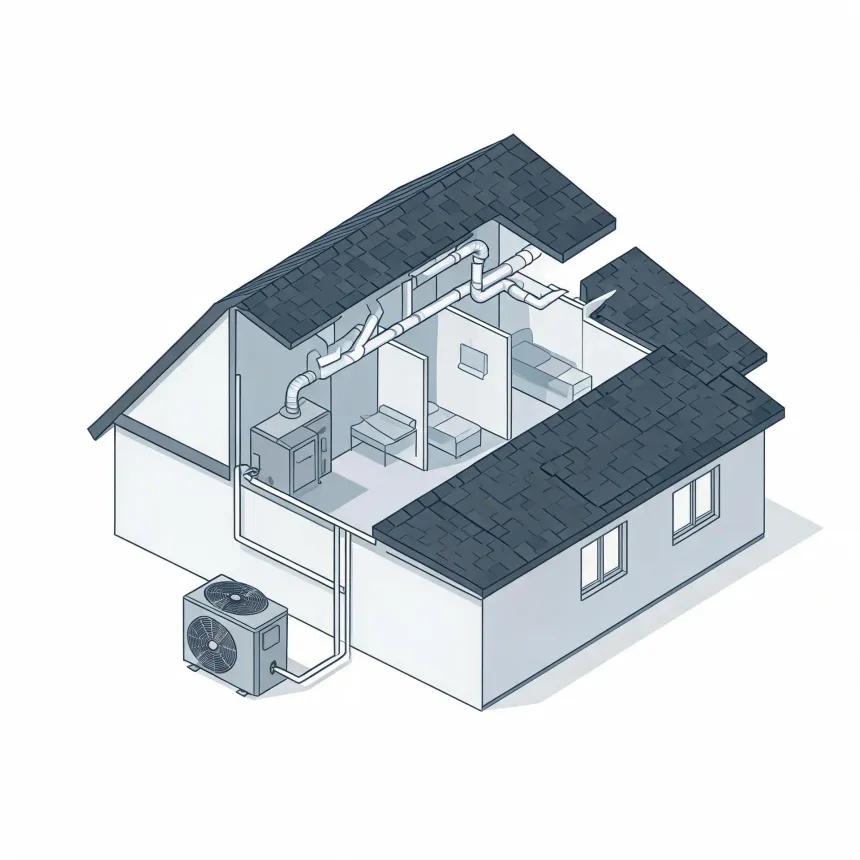
Isometric line illustration of a cutaway single-story house showing interior ductwork, an indoor air handler unit, and an outdoor condenser connected by refrigerant lines, with a dark shingled roof.
Your system heats October through May and cools June through August.

NOAA nClimDiv, 1991–2020 normals

A tech starts a heat pump visit by asking what the system is actually doing, not heating, not cooling, running nonstop, or short cycling on and off.

The answer to that question narrows down the job before a panel ever comes off, because a system stuck in cooling and one that won't defrost point to different parts.

Half the homes in Henry County date to 1968 or earlier, and a heat pump that came with the house is likely near the end of its run

Half the homes here were built by 1968
34 hail events from 2015 to 2024
18 winter storms from 2015 to 2024
Nothing here is hard on a heat pumpAt 13.40 cents a kilowatt-hour, a heat pump still costs less to run here than straight electric heat, even in a cold snap

Henry County sits in zone 5A, a cool climate where winter asks more of a heat pump than summer does. Overnight lows average 18°F across December, January and February, and that is normal running weather for a heat pump, not a strain on it. It pulls heat from outside air even when it's cold, and a defrost cycle clears the frost that builds up on the coil along the way. The county sees its share of hail and winter storms, but neither one explains why a heat pump quits. Most of the time the cause is something ordinary inside the unit. A worn contactor, a weak capacitor, a bad sensor, a reversing valve stuck in one position. Find the part at fault and the fix is usually straightforward.

Ask how much life it has left

If your system came with an older house, it may be near the end of its life. Ask how much life it has left before paying for a big repair.

Find a contractor
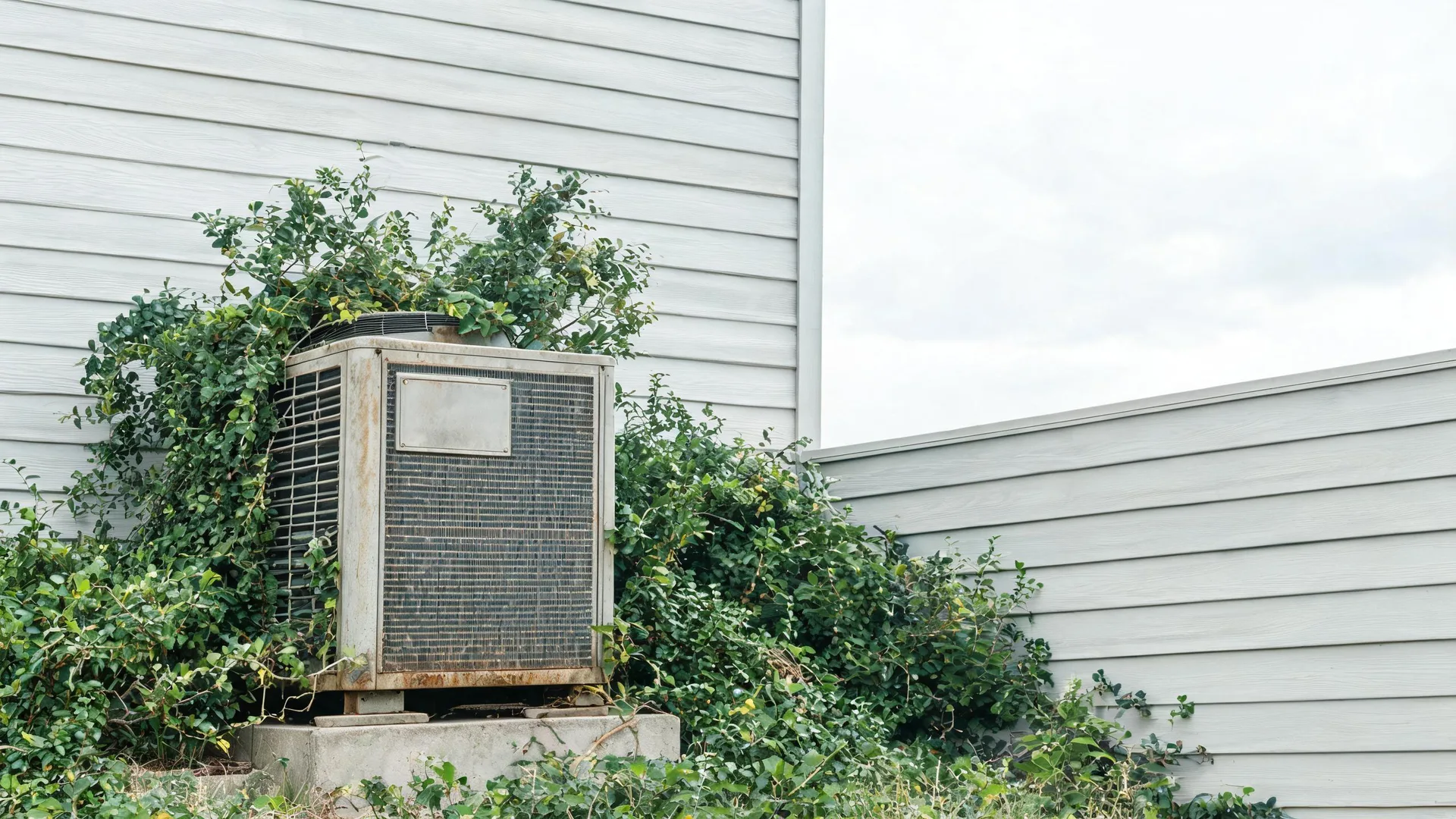
A residential heat pump outdoor unit mounted on a concrete pad next to a house with gray vinyl siding.

What wears out in a heat pump isn't the weather, it's the cycling

A heat pump doesn't usually fail from one hard winter. It fails from the number of times it starts and stops over the years it runs. Every cycle puts a load on the contactor and the capacitor that get the compressor going, and both wear down a little more each time. The reversing valve takes its own kind of wear, since it has to switch position every time the system moves between heating and cooling instead of sitting in one mode like a furnace does. None of that means trouble is coming soon. It means that when a heat pump does act up, the cause is usually one of these parts worn past its point, not anything to do with the weather outside.

A weak start wears the parts around it

A heat pump struggling to start on every cycle keeps asking the same parts to cover for it. The contactor keeps arcing. The capacitor keeps feeding a compressor that wants more current than it's getting. None of that lets up because the system is still running. It just keeps happening, cycle after cycle, until one of those parts gives out.

One stuck part can drag another down with it

A reversing valve stuck partway can let the system run heating and cooling at the same time, a load the compressor was never built to carry for long. A compressor that strains on every start wears toward a failure that takes the whole unit down, not just the part that started the trouble. Letting a small problem keep running is usually how it turns into a bigger one.

Most heat pump trouble shows up as a change you can feel, not a mystery. Air coming from the vents that feels cool when it should feel warm, or warm when it should feel cool, usually means the reversing valve isn't switching the way it should. A unit that runs and runs without ever reaching the temperature on the thermostat is struggling to move enough heat, which points to the compressor or a low charge. Short cycling, where the system starts, stops, and starts again within a few minutes, puts wear on the parts that get it going and is worth a call before it gets worse. Listen for anything new too. A hum with no fan movement outside usually means a failed capacitor. A clicking that repeats without the compressor catching points to the contactor. None of these fix themselves, and running the system through them just adds more worn starts to whatever part is already failing.

Repair or replacement usually comes down to what broke and what it's attached to. A contactor, a capacitor, or a sensor is a contained job. The part fails, the part gets replaced, and the rest of the system doesn't know the difference. A compressor is a different question, because that's most of what a heat pump is. When a compressor fails, a tech is really asking whether it makes sense to put a new compressor into an old system, or whether the rest of the unit is worn close enough behind it that the same visit happens again in another part. Age alone doesn't answer that. What the unit has already needed answers it better. A system that's had one unrelated repair in its life is in a different place than one that keeps coming back for something new. The reversing valve matters too, since it's the part that lets a heat pump do double duty as heating and cooling, and replacing it is a bigger job than most anything else short of the compressor. None of this is a judgment call for the kitchen table. It's what a tech is actually weighing while the panel is off and the readings are in hand.