A nighttime street view of several illuminated two-story red brick homes with front porches, flanked by a large tree.

Heat Pump Repair in Pella, IA

Tell us about the job

Takes about a minute. No obligation.

RepairHeat PumpMarion County, IA
Step 1 of 2

What ZIP code is the job in?

Check the thermostat and the breaker first

Set the thermostat below room temperature and listen for the outdoor unit to kick on. If it stays silent, check the breaker panel for a tripped switch before assuming the worst. A heat pump that won't respond to the thermostat at all sometimes just needs power restored, not a repair.


Look at the outdoor unit and the vents

Walk outside and check that the outdoor unit isn't buried in leaves, ice or snow, since blocked airflow around it can shut the system down or make it struggle. Inside, check that supply vents are open and not blocked by furniture or rugs. These are things a homeowner can clear away before ever calling someone out.

8 months
October through May, your system heats
3 months
June through August, it cools
17°F
the average winter night it heats against
83°F
the average summer afternoon it cools against
Isometric cutaway illustration of a single-story house showing interior ductwork, an air handler and rooms, with an outdoor condenser unit connected by refrigerant lines on a plain white background.
Your system heats October through May and cools June through August.

NOAA nClimDiv, 1991–2020 normals

Pella winters bring overnight lows near 17°F, cold enough that a heat pump leans on its backup heat strip to keep up.

When a heat pump runs constantly without warming the house, the usual cause is a stuck defrost cycle or a backup heat strip that quit, not the cold itself.

Marion County homes are not what's wearing out your heat pump

Half the homes here were built by 1975
79 damaging wind events from 2015 to 2024
70 hail events from 2015 to 2024
Marion County homes are not what's wearing out your heat pumpIowa homes paid 13.40 cents per kilowatthour in 2024, and that's the only thing unusual here.

Heat pumps here run eight months, October through May, so the first cold week of October is when a weak part finally gets found. A capacitor or contactor that limped through last spring can fail outright the first morning it has to run nonstop. Cooling is the short season, just June through August, so the switch back to heat each fall asks the system to do something it hasn't done since May. That first real cold snap is when a worn part gives out, not because the season is harsh, but because it's finally being asked to work. Getting it looked at in September, before the heat is needed every day, beats waiting until the system is already struggling to keep up.

Get the usual fix

Nothing about this area is especially hard on it. It's most likely the usual problem with the usual fix.

Find a contractor
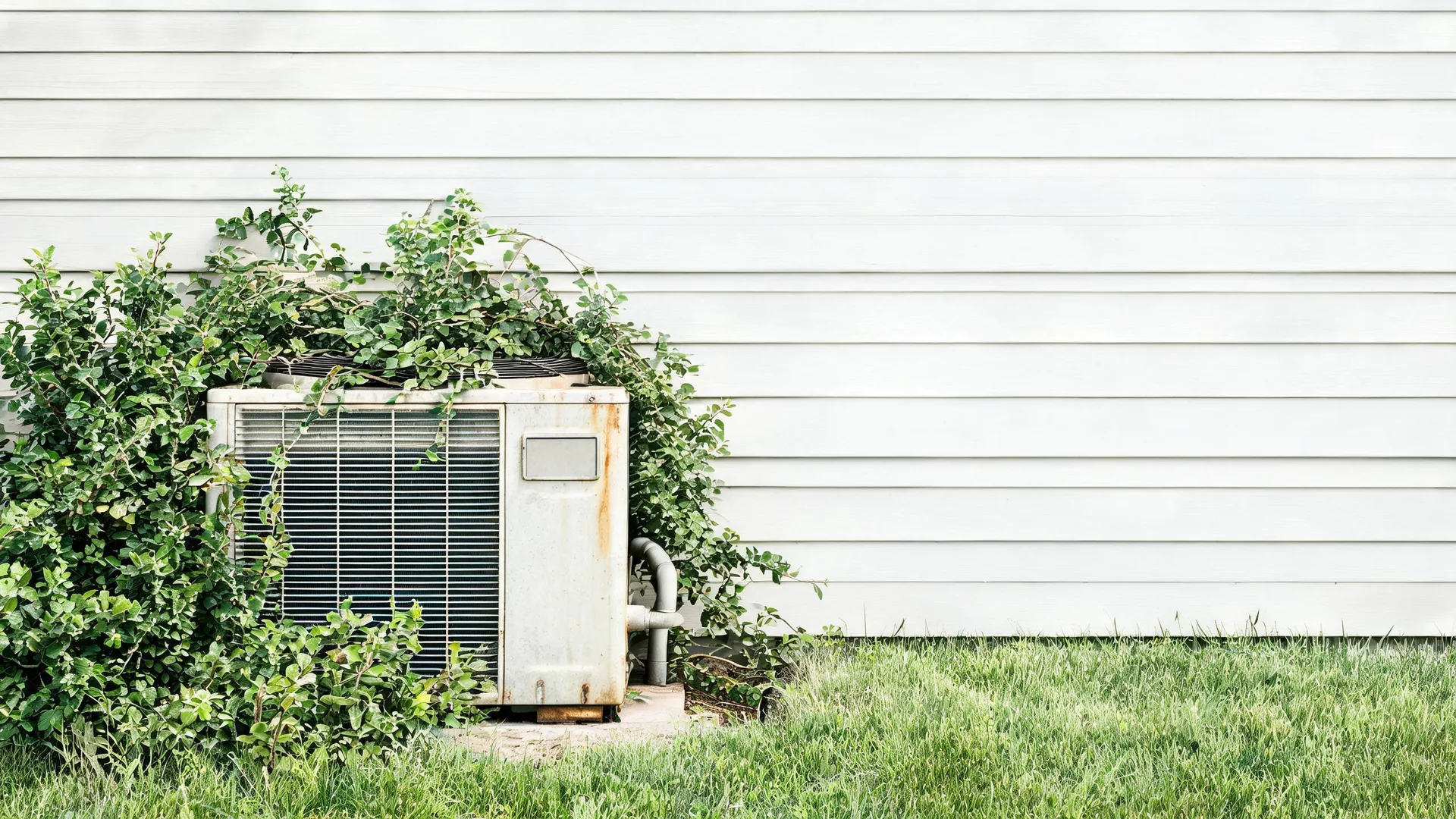
A gray heat pump outdoor unit mounted on a concrete pad next to the stone-accented exterior wall of a house.

What a heat pump sounds like before it fails

A heat pump that's failing usually tells you before it quits outright. Short cycling is one of the first signs, the system kicking on and off every few minutes instead of running a steady stretch. Ice building up on the outdoor unit and not clearing during defrost is another, especially if you notice frost thickening rather than melting off in cycles. Warm air blowing when it should be hot, or the system running nonstop without the house ever reaching the set temperature, points to a failing component rather than normal operation. Listen for the outdoor unit too. A hard clunk at startup, a grinding sound, or a hum with no fan movement all mean something inside has worn down. None of these get better left alone. A part that's struggling now is a part that will fail outright on the next hard freeze, usually in the middle of the night.

Most failures are a handful of parts

The reversing valve, the defrost control board, the run capacitor and the contactor account for most heat pump breakdowns. The reversing valve can stick partway, leaving the system stuck in one mode no matter what the thermostat asks for. The defrost board can misread its sensor and either skip defrost entirely or never end it. A capacitor weakens with age and stops giving the compressor or fan motor the jolt it needs to start. A contactor pits and burns from switching on and off thousands of times, until it stops passing power at all.

The compressor is rarely the real problem

A failing capacitor or contactor can make a compressor seem dead when it isn't. The compressor won't start without a strong signal from both, so a tech checks them first rather than assuming the compressor itself is shot. Swapping a capacitor or contactor is quick work once it's found to be the cause. A compressor that's actually failed is the rarer case, and usually the last thing checked, not the first.

A heat pump rarely fails all at once. It gives out in stages, and running it through those stages turns a small problem into a bigger one. A weak capacitor forces the compressor to pull harder on every start, and each hard start wears the windings a little more until the compressor itself is damaged. A stuck reversing valve run too long can carry liquid refrigerant back to the compressor instead of gas, and that washes oil out of the bearings. Ice left to build on the outdoor coil blocks airflow, so the system works harder for less heat while the compressor runs hotter than it should. None of this shows up right away. It shows up later as damage to a part that was never the original problem.

Repair makes sense for most of what goes wrong with a heat pump. A capacitor, a contactor, a defrost board, these get swapped out and the system runs like new, because the compressor and the coils, the expensive parts, were never the problem. Replacement gets talked about when the compressor itself is the failure, since that's the one part that doesn't get swapped on its own, it comes with a new system attached. Age matters too, not because a number says so, but because a unit that's needed several repair calls in a few years is telling you its other parts are wearing down the same way the one that failed did. A tech who's honest with you will say which case you're in before doing any work, not after.