




Three illuminated two-story brick houses on a tree-lined residential street photographed at twilight, with warm window light and landscape uplighting visible against a deep blue evening sky.

Heat Pump Repair in Storm Lake, IA

Tell us about the job

Takes about a minute. No obligation.

RepairHeat PumpBuena Vista County, IA
Step 1 of 2

What ZIP code is the job in?

Heat pumps here run from October through May, about eight months straight. September is the month right before that starts, and it's often when a weak part is still limping along but won't hold up once the cold settles in. If yours is acting up in these first weeks of real cold, that's usually not bad luck. It's the extra load finding whatever was already marginal. The same thing happens in May, right before the switch over to cooling in June. Worth having someone look at it now rather than waiting to see if it sorts itself out.

8 months
October through May, your system heats
3 months
June through August, it cools
12°F
the average winter night it heats against
81°F
the average summer afternoon it cools against
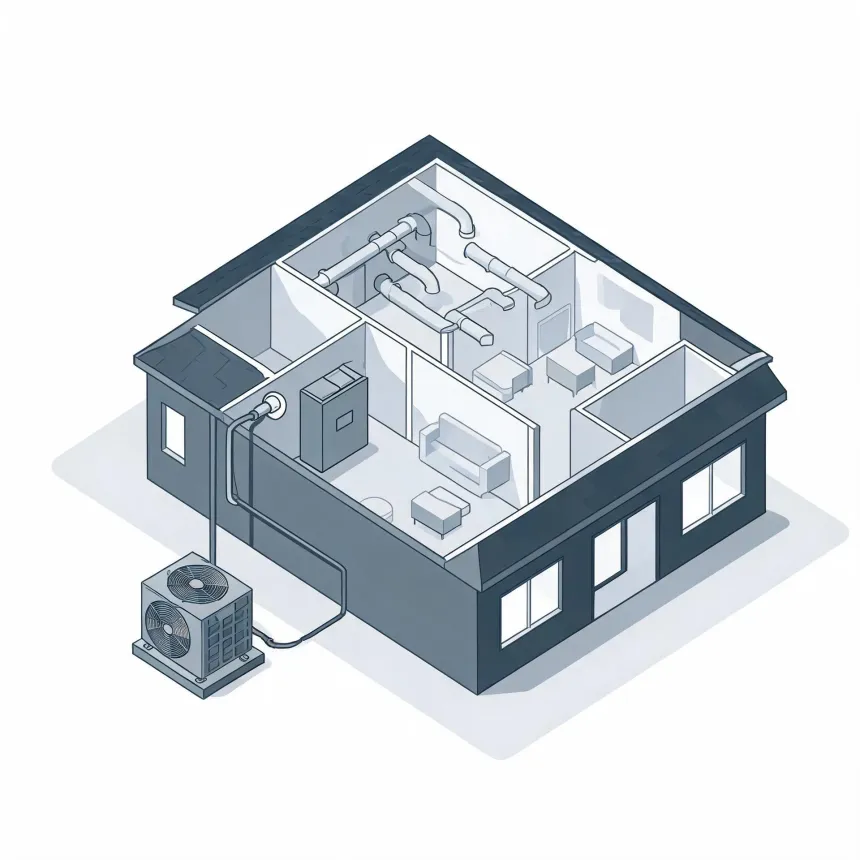
Isometric line illustration of a cutaway single-story house showing interior rooms, ceiling ductwork and an indoor air handler, connected by a line to an outdoor condenser unit on a pad beside the building.
Your system heats October through May and cools June through August.

NOAA nClimDiv, 1991–2020 normals

Buena Vista County winters bring overnight lows near 12°F from December through February.

A heat pump leaning on a weak capacitor or low charge will show it on nights near 12°F, not years from now.

Half the homes in Buena Vista County date to 1964 or earlier

Half the homes here were built by 1964
23 hail events from 2015 to 2024
31 winter storms from 2015 to 2024

A heat pump that's old and losing refrigerant slowly is a different decision than one with a failed capacitor or a bad defrost control. The second kind is a part swap, usually worth doing no matter the age of the unit. The first kind is the one to think harder about, because a slow leak often means a coil that's corroding from the inside, and sealing one leak doesn't mean another won't show up next season. Age matters less than how the unit has been treated. One that's been serviced and kept clean can outlast a younger one that's been ignored. If the compressor itself is failing, that's usually the point where repair stops making sense, since it's the most expensive part in the system and the labor to replace it isn't far off from putting in a new unit.

Before you pay for the repair, ask how much life is left in the unit

If this heat pump came with the house, there's a real chance it's older. Get the technician's read on its condition alongside the diagnosis, so you know whether you're fixing a part or buying time on a system that's already on its way out.

Find a contractor
A dark gray heat pump unit mounted on a concrete pad next to a house with gray siding and a stone veneer wall.

What to rule out before you call

Check the thermostat first. Make sure it's set to heat and the set point is actually above room temperature, not sitting there by accident. Go outside and look at the outdoor unit. If the coil is caked in ice beyond what a normal defrost cycle clears, or the fan isn't spinning at all, that's worth noting for whoever comes out. Check that nothing is blocking airflow around it, no leaves packed against the coil, no snow piled against the side. Inside, pull the air filter and hold it up to a light. If you can't see light through it, swap it or clean it before you do anything else, since a clogged filter can make a perfectly healthy system act like it's failing. Check that every supply vent in the house is open and unblocked by furniture or rugs. Look at the breaker panel. A tripped breaker or a blown fuse will shut the whole system down and look exactly like a bigger problem. If the outdoor unit is running but the air coming out doesn't feel warm, that points toward the refrigerant side rather than the electrical side, and it's worth mentioning when you call. None of this tells you what's actually wrong inside the system. It just means whoever shows up isn't starting from zero.

A struggling compressor keeps drawing on itself

If the compressor is starting hard or running low on charge, every hour it stays on is another hour of strain on the windings and the bearings. A compressor that trips its overload once can usually be nursed along. One that trips repeatedly is wearing toward a short, and a shorted compressor is not a repair, it's a new unit.
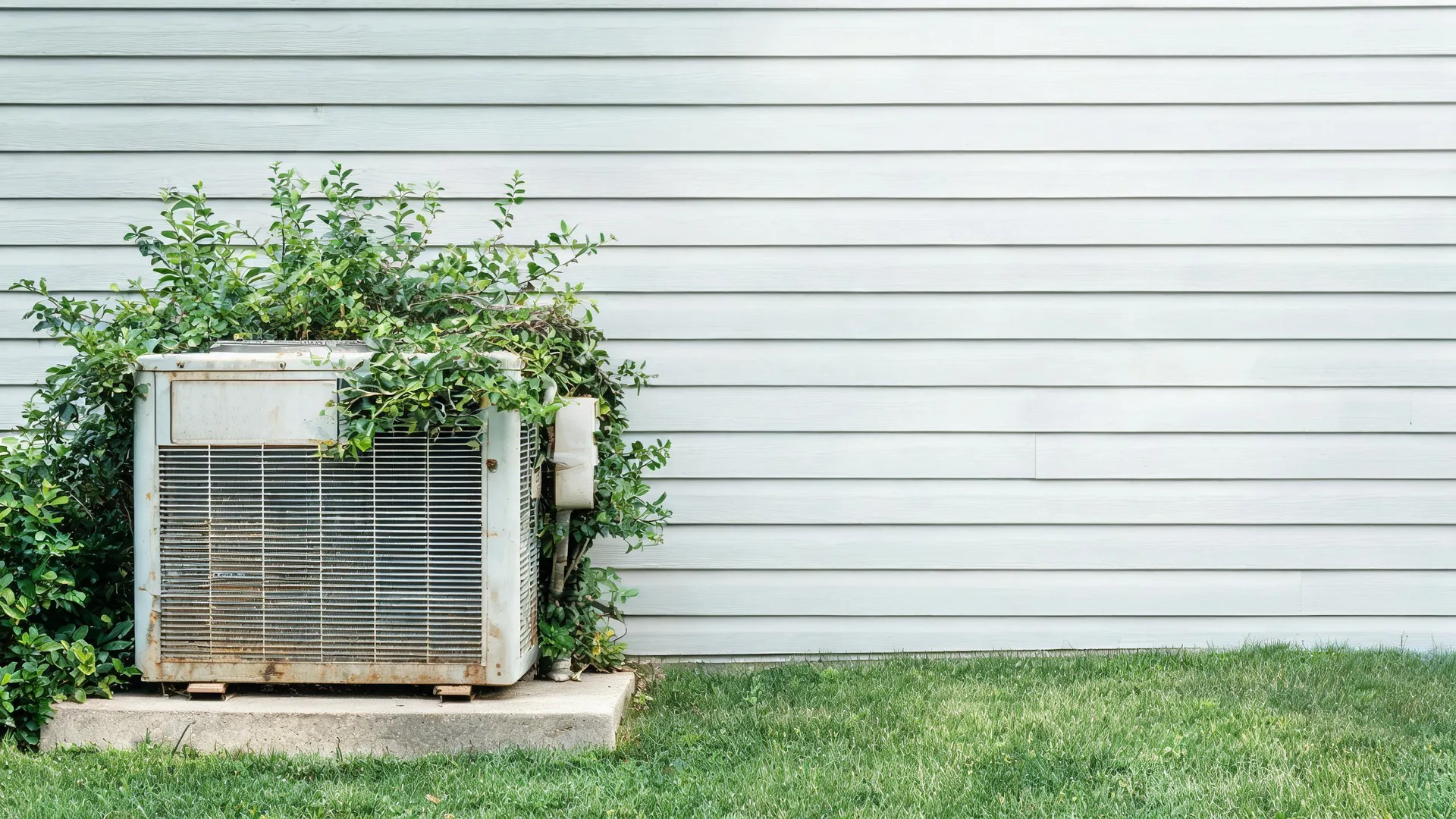
A frozen coil feeds on itself

Once ice builds past what the defrost cycle can clear, the coil loses the airflow it needs to ever thaw back out on its own. The system keeps calling for heat, keeps running the same fault, and keeps packing on more ice. Left alone overnight, a coil that started with a thin frost can end up solid, and that's a much longer job to recover from than catching it early.

Most heat pump failures trace back to a handful of parts. The run capacitor is usually first, since it weakens with age and heat cycling, and a weak one makes the compressor or fan motor strain to start. The defrost control board is another common one. It's what tells the unit when to reverse into defrost and when to switch back, and if it fails, the coil either never clears or never stops defrosting. Contactors wear out too, the switch that feeds power to the outdoor components, and a pitted one can stick closed or fail to close at all. Low refrigerant charge almost always means a leak somewhere in the lines or coil, not a fluid that simply ran low on its own. And a reversing valve that won't shift is why some units blow cold air when they're told to heat. None of these fail from one cold snap. They fail from months of normal cycling finally catching up with a part that was already worn.

A diagnostic starts outside, with the unit running if it can run at all. The technician checks refrigerant pressures on the gauges, because that number says more about what's wrong than anything you can see or hear. They'll pull the cover off the contactor and capacitor to look for pitting or bulging, and test the capacitor's actual output against what it's rated for, since a capacitor can look fine and still be weak. Inside, they check the temperature of the air coming off the coil against the air going into it, which tells them whether the system is actually moving heat or just moving air. They'll cycle the unit into defrost manually to see whether the board responds the way it should, and watch the reversing valve shift to confirm it's actually switching and not just getting the signal to. Most of this takes longer to explain than to do. The point of it is to find the one part that's actually failing, not to start swapping parts and see what helps.